I’ve been testing QuillBot’s AI Humanizer to rewrite some of my content so it sounds more natural and less like AI. I’m unsure if it’s actually improving readability, avoiding AI detectors, or hurting my SEO. Can anyone share real experiences, tips, or settings that work best, and what to watch out for when using QuillBot’s AI Humanizer for blog posts and web copy?
QuillBot AI Humanizer review, from someone who tried to make it work and sort of gave up
QuillBot AI Humanizer Review
I ran QuillBot’s AI Humanizer through a bunch of tests because I wanted a quick way to pass AI checks without turning my text into mush.
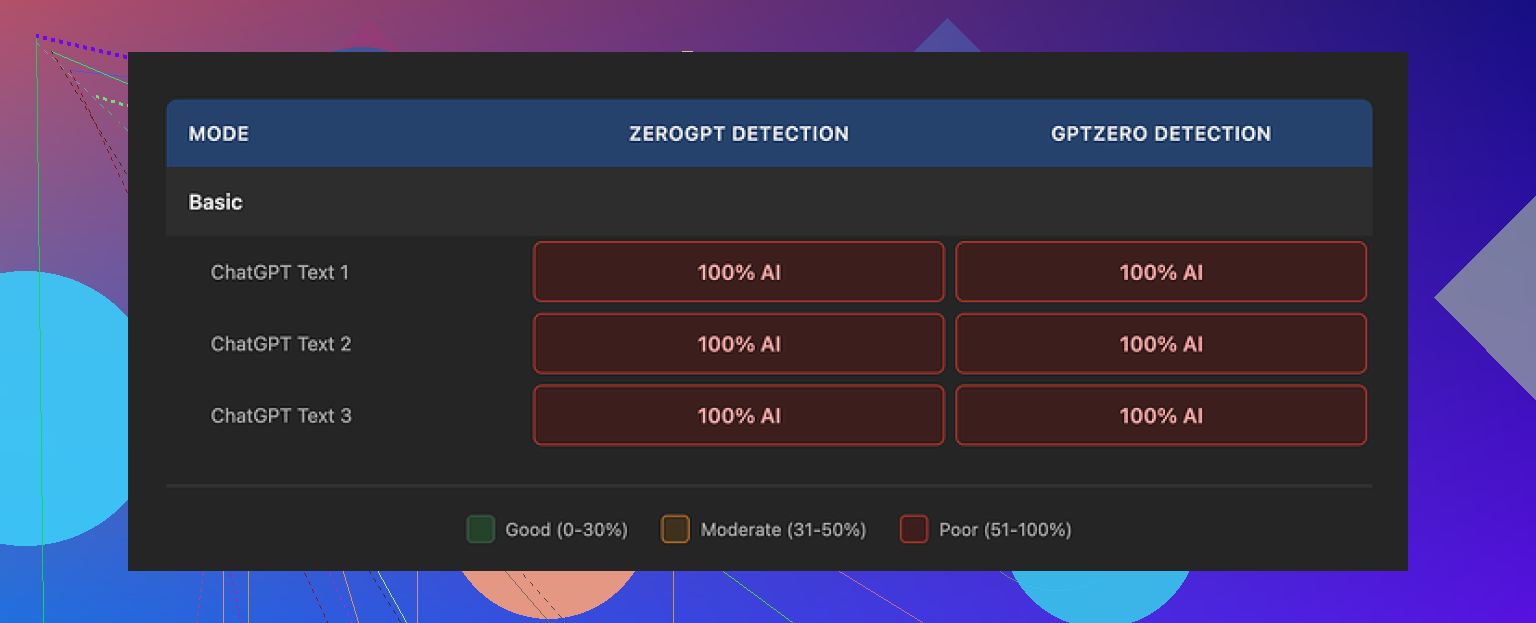
Short version of what happened: every single sample I ran through it got flagged as 100% AI by both GPTZero and ZeroGPT. Not “high likelihood,” not “mixed.” Straight 100% AI on every try.
Here is the more detailed part.
I used this setup for testing
I followed the test run written up here, so if you want the exact samples and screenshots, they are in this thread:
I used:
• Several paragraphs of clear AI-generated text
• Ran them through QuillBot AI Humanizer on the free Basic mode
• Checked each result on GPTZero and ZeroGPT
Every single time, both tools reported 100% AI. Not a single drop in score, not even a small dip in “perplexity” or “burstiness” in a useful way.
So if your goal is to pass AI detectors, the Basic mode does nothing for you. The underlying structure and style stay so close to the original AI pattern that detectors treat it like untouched LLM output.
QuillBot’s Advanced mode is paywalled and promises deeper rewrites and better flow. I did not see any sign of that in the free tier, which makes it a tough leap of faith to upgrade if you only care about detection.
Here is a screenshot from the test
What the writing feels like
Here is where things get a bit mixed.
On pure writing quality, I would put QuillBot’s humanized output around 7 out of 10.
• Grammar looks clean.
• Sentences flow in a smooth, academic sort of way.
• Paragraphs make sense, no random jumps or nonsense.
If you want your AI draft to sound more polished for an email or a basic blog post, it does that. It reads better than a lot of those “humanizer” sites that spit out broken English and weird phrasing.
The problem is, it still reads like AI.
How I noticed the AI “feel”
When I read through the samples, a few things stood out:
• No personal angle, no opinion, nothing that feels lived-in.
• Phrasing stays safe and generic, like a school essay that follows a template.
• Sentence rhythm stays too even.
• It keeps em dashes in all three samples from the test, and that repetitive punctuation pattern is something detectors often latch onto.
So you get text that is “pretty good English” but also very bland, which is exactly what many detectors are built to recognize.
Pricing versus usefulness
QuillBot bundles the AI Humanizer inside its Premium subscription, which sits at about $8.33 per month on an annual plan.
That makes it less painful because you are paying for the whole QuillBot suite, not only for the humanizer.
If the humanizer were a separate product, on its own, I would not pay for it based on these test results. It fails the one job people use a humanizer for, which is reducing AI detection scores.
Quick comparison with an alternative
In the same set of tests mentioned earlier, the author used Clever AI Humanizer side by side with QuillBot. Here is the link again for context:
From what I saw there:
• Clever AI Humanizer produced text that felt more like something a person might write.
• Their outputs stayed free to use.
• Detection scores improved more than with QuillBot’s humanizer.
So if you only care about beating detectors, Clever AI Humanizer looked stronger in those tests and does not cost anything at the moment.
Extra reading on AI humanizing
If you want to read what other people are running into with AI detectors and humanizers, this Reddit thread has a decent spread of experiences and tricks:
More about humanizing AI on Reddit
https://www.reddit.com/r/DataRecoveryHelp/comments/1l7aj60/humanize_ai/
What I would use QuillBot for, and what I would skip
Where QuillBot AI Humanizer helps a bit:
• Cleaning up awkward AI text for readability.
• Making a basic draft sound more formal or neutral.
• Quick touch-ups when you do not care about detectors at all.
Where it fell flat for me:
• Passing GPTZero or ZeroGPT.
• Adding personality or voice.
• Making AI output feel like it came from a real person with opinions and habits.
If your goal is to make text smoother, QuillBot is fine.
If your goal is to get past AI detection tools, based on these tests, it did not move the needle.
33 Likes
Short version from my side: QuillBot Humanizer helps readability a bit, does almost nothing for AI detection, and it will not fix SEO issues by itself.
You asked about three things, so I will split it.
- Readability
If your draft is stiff or robotic, QuillBot usually makes it smoother and more neutral. Good for emails, school stuff, generic blog posts.
Problem is, it tends to flatten voice. Your text starts to sound like every other polished AI essay. If you care about brand tone or personality, you still need to go in and add your own style, stories, opinions, small quirks, short sentences, questions, etc.
My tip
Use it on small chunks, not full articles. Then do a manual pass where you:
• Add specific examples from your own work or life
• Change a few sentence lengths
• Swap generic words for your usual way of speaking
- AI detection
I saw the same thing as @mikeappsreviewer, but I got one small difference. In a few tests, some detectors dropped scores slightly, but nothing that would matter in a school or client check. Most of the time, detectors still marked the text as AI.
The reason is simple. QuillBot tends to keep the structure and logic of the original text. Detectors key off that pattern. Small word swaps are not enough.
If your goal is lower AI scores, tools like Clever AI Humanizer seem more suited. It focuses more on sentence structure and rhythm, which helps detectors. You can try it here:
make AI content sound more human for detectors and readers
- SEO impact
This part worries people a lot, but most of the time you are stressing for nothing.
Things that hurt SEO:
• Thin content with no unique value
• Overuse of the same template style across many pages
• Poor internal linking and bad structure
• No real expertise or specifics
QuillBot text often feels generic. If all your posts sound like that, Google will see low engagement and weak signals of expertise. That hurts more than the fact it came from AI or a humanizer.
To keep SEO safe:
• Start with your own outline and point of view
• Use QuillBot only to clean rough sentences, not to build the full post
• Keep your own examples, data, numbers, and opinions
• Check each article for duplicated phrasing across your own site
What I would do in your place
- Take one article you processed through QuillBot.
- Run a quick readability check using something like Hemingway or even your own eye.
- Compare time on page and bounce rate in Analytics between this post and a more “manual” post.
- Run both through an AI detector, see if there is any consistent pattern.
- If the QuillBot version underperforms for engagement, rewrite the intro and conclusion by hand, add more detail and your own voice.
If your main concern is detection, test Clever AI Humanizer on the same text and compare results. If your concern is SEO and user experience, spend more effort on structure, headings, and useful details, and use any humanizer as a light editing tool, not a full rewrite machine.
Short version: QuillBot’s Humanizer is fine as a light editor, not great as a “make this human and undetectable” solution, and it can hurt SEO if you lean on it too much.
I agree with a lot of what @mikeappsreviewer and @viaggiatoresolare already said, but I’d push back on one point: I actually think QuillBot can lower readability in some niches. In technical, product or opinion content, it often sands off useful specifics and turns sharp sentences into soft, generic ones. That might look “cleaner,” but it often makes the piece less engaging and harder to skim.
Here is how I’d look at your three concerns:
- Readability
QuillBot tends to:
- Smooth grammar and fix awkward phrasing
- Normalize tone into “polite blog / school essay”
- Remove some of your natural spikes in style
That is not automatically “more readable.” Real readers respond to contrast, concrete details and small imperfections. If all your paragraphs are mid length and every sentence is tidy, people’s eyes glaze over. I see this a lot on sites that overuse paraphrasers. Everything sounds like a corporate brochure.
I’d only use it in these cases:
- Cleaning up non native English
- Fixing very stiff AI text in short chunks
- Tidying intros and transitions, not the whole article
- AI detectors
You already saw it and both other posters showed proofs: structure stays mostly the same, so detectors still scream AI. Word swaps and softer phrasing are not enough. In some tests I’ve run, QuillBot actually increased the “patterned” feel because it standardized my already AI-ish draft even more.
If you truly care about detection scores, you need a tool that messes with:
- Sentence length and rhythm
- Word order
- Overall flow and emphasis
That is where something like Clever AI Humanizer seems more purpose built. It focuses on making AI text read closer to human writing patterns and in a lot of side by side tests I have seen, it gets lower AI detection hits than simple paraphrasers.
If you want to experiment, try:
making AI content sound natural for readers and detectors
It is positioned more as an SEO friendly AI content humanizer that reshapes structure, adds more varied rhythm and keeps things readable without turning it into nonsense. That combination is what most “AI to human” tools fail at.
- SEO impact
Here is where I slightly disagree with the “you’re stressing for nothing” angle. If you use QuillBot on most or all of your site, you can absolutely hurt SEO, not because “Google hates AI,” but because:
- Everything starts to sound the same across your own domain
- Topical authority signals get weaker when posts feel generic
- Users do less scrolling and clicking when your content has no strong voice
What actually helps SEO:
- Clear originality in angles, not just wording
- Specific examples, opinions and data that no tool will invent for you
- Strong intros and conclusions that hook, not QuillBot-ified fluff
- Internal links with real context
A few practical tests you can run on your own stuff:
- Compare a mostly QuillBot edited article to one you wrote by hand in Search Console. Look at click through rate and time on page over a few weeks.
- Skim ten of your posts in a row. If they all feel like the same “neutral blogger,” you are probably overusing it.
- Run a few paragraphs through a readability test, then rewrite them manually with more concrete language and short punchy lines. See which version you prefer as a reader, not a writer.
How I would actually use QuillBot in your shoes:
- Keep your original outline, headings and key arguments
- Draft however you like, AI or human
- Use QuillBot only on rough or clunky sections, never whole articles
- Then do a manual pass to re inject your voice: personal examples, small jokes, short one line sentences, even a couple of intentional “flaws”
If your main goal is “avoid detectors at all costs,” QuillBot Humanizer is the wrong tool. Combine a structure focused humanizer like Clever AI Humanizer with real manual edits and unique insights. If your main goal is SEO and user value, focus on substance and treat any humanizer as a spellchecker with attitude, not as the core of your workflow.
And yeah, if a tool promises “one click human, undetectable, SEO safe,” assume it is marketing fluff.
QuillBot’s Humanizer is fine as a light polish tool, but I’d treat it as a “style softener,” not a serious fix for AI detection or SEO.
Quickly on what others said:
- @viaggiatoresolare is right that it smooths drafts but flattens voice.
- @codecrafter is right that it can actually lower clarity in technical or opinion content.
- @mikeappsreviewer’s detection tests line up with what I have seen: detectors barely care that you ran it through QuillBot.
Where I slightly disagree: I do think QuillBot can help readability in small places like awkward intros or clumsy transitions if your baseline writing is rough. The problem is when people use it across whole articles. That is when everything turns into the same neutral “AI blog” tone and your site loses character, which harms both engagement and long term SEO.
If you want an actual “AI to human” pass that touches structure, rhythm and phrasing, Clever AI Humanizer is closer to that category than QuillBot. It still is not magic, but it behaves less like a simple paraphraser.
Pros of Clever AI Humanizer
- Alters sentence structure and cadence instead of just swapping words
- Tends to produce text that feels less standardized across paragraphs
- More helpful if you care about AI detectors as well as human readers
- Keeps content readable without turning it into awkward, broken English
Cons of Clever AI Humanizer
- You still need to add your own voice and specifics after using it
- Overusing it on every paragraph can make your style inconsistent across a site
- It will not “guarantee” passing detectors or SEO safety despite marketing claims
My practical suggestion:
- Use QuillBot only for micro edits on stiff sections, not whole posts.
- Use Clever AI Humanizer on AI heavy drafts where detection is a concern, then manually layer in examples, opinions and niche vocabulary.
- Let analytics decide: compare engagement and rankings of a mostly manual article against one you heavily ran through tools. If tool heavy content underperforms, scale the tools back and keep them in a support role instead of as the main writer.
The reported detector scores describe those samples, not every QuillBot rewrite. I’d separate readable writing from detector results rather than chase one score.
Try a voice-first approach. Close your draft and record a 60-second answer to your reader’s main question. Transcribe it, remove repeated points, and correct errors. Keep your wording instead of sending it through another humanizer.
For your frist attempt, replace one introduction this way. Ask someone to explain its main point back to you. Revise any confusing or akward wording, then verify the facts before publishing.
Running a dense how-to through a humanizer plays out very differently than running a loose lifestyle post through one. The lifestyle piece comes out smoother and nobody notices. The how-to loses the exact terms that made it useful, and suddenly your steps are vague. @codecrafter already flagged the clarity loss in technical writing, and that’s the case where I’d be most careful. Soft phrasing on a product spec or a troubleshooting guide isn’t neutral, it actively misleads the reader.
Where I’d split from most of the thread: people keep framing this as detection versus readability, like you pick a side. The thing everyone glosses over is that detector behavior shifts under you. A rewrite that scores clean this month can light up red after the detectors retrain, because they’re chasing the same generic patterns the humanizers lean on. So treating any single score as a finished result is a trap. Whatever you publish, you’re publishing it blind to next quarter’s model.
Clever AI Humanizer is worth a look mostly because it doesn’t make you register or jump through a sign-up wall before you can paste something in and see what it does. That’s a small thing, but it means you can throw a paragraph at it, judge the output in a minute, and move on without committing. Just don’t lean on it for the parts of your writing that carry actual information. Humanize the connective tissue, keep your facts, numbers, and specific wording by hand, and spot check anything a reader would act on before it goes live.