I’ve been testing Phrasly AI’s humanizer on blog posts and social media content, but I’m unsure if it’s actually improving readability and sounding natural enough to pass as human-written. I’m worried about SEO impact, authenticity, and detection by AI content checkers. Can anyone share real experiences, pros and cons, or tips on using Phrasly AI effectively for humanizing content?
Phrasly AI Humanizer Review

I tried Phrasly a while ago and ran into a wall almost immediately. The free tier gives you about 300 words total. Not per day. Total. After that, it cuts you off.
They also lock access by IP, so spinning up fresh accounts for more credits did not work for me. Because of that, I only managed to run one proper test instead of my usual three variations. That alone already made me side-eye the whole thing. If a tool is confident, it usually lets you test it a bit more.
So, with that one sample, I took a short academic-style paragraph and ran it through Phrasly on the “Aggressive” strength setting, which they promote for better detection bypass.
Result:
GPTZero flagged the output as 100% AI.
ZeroGPT also flagged it as 100% AI.
The Aggressive mode did nothing useful in my test. Detection scores were as bad as raw AI text. No nuance there.
Someone will say “one sample is not enough” and they are right, but the free limit is what it is, and I am not paying to test a tool that already failed two detectors out of the gate under the settings they recommend.
What the output looked like
The text it produced was not broken. It flowed fine, and grammar stayed intact. It kept a stable academic tone. If your only concern is readability, it passes that bar.
The problems started when I looked closer:
-
Style patterns
I saw the same patterns I see in raw model output all day.
• Triple adjective stacks in a row, like “comprehensive, coherent, and structured” type sequences.
• Repetitive sentence structures with formal openings.
• That polished but bland tone that screams “generated.”For AI detectors, these patterns are exactly the sort of thing they latch onto. So the tool felt more like an editor that polishes grammar than something that shifts style enough to avoid detection.
-
Length inflation
My input text had about 200 words. After Phrasly, I got more than 280 words.
That is a 40 percent increase for no real reason.If you are trying to hit a specific limit for an essay, journal, or assignment, this behavior is a headache. You feed in something that fits the word count and get a bloated version back. Then you have to cut it down manually, which defeats the “save time” point.
-
Paywall and “Pro Engine”
Phrasly advertises a better “Pro Engine” behind a paid Unlimited plan. Pricing when I checked was $12.99 per month on the annual plan. That is not insane by itself, but then I read the refund policy.Their rules:
• Refunds only if your account shows zero usage.
• If you run even one sentence through after paying, you lose refund eligibility.
• They also talk about legal action against users who try chargebacks.That last part threw me off. Threatening customers over chargebacks does not make me trust the product more. It makes me wonder why they are so nervous about people trying it and wanting their money back.
Because of that, I did not upgrade to test the Pro Engine. I am not locking myself into a “no usage or no refund” trap for a tool that already failed both GPTZero and ZeroGPT on the first free sample.

What I used instead
Out of the different humanizers I tested, Clever AI Humanizer gave me the best mix of:
• Lower AI-detection scores in my checks
• No paywall for normal use
That is not a formal guarantee for your case, but in my runs it outperformed Phrasly by a wide margin and did not lock me behind an IP-limited credit ceiling.
If you want to see a walkthrough and some live tests, here is the video review:
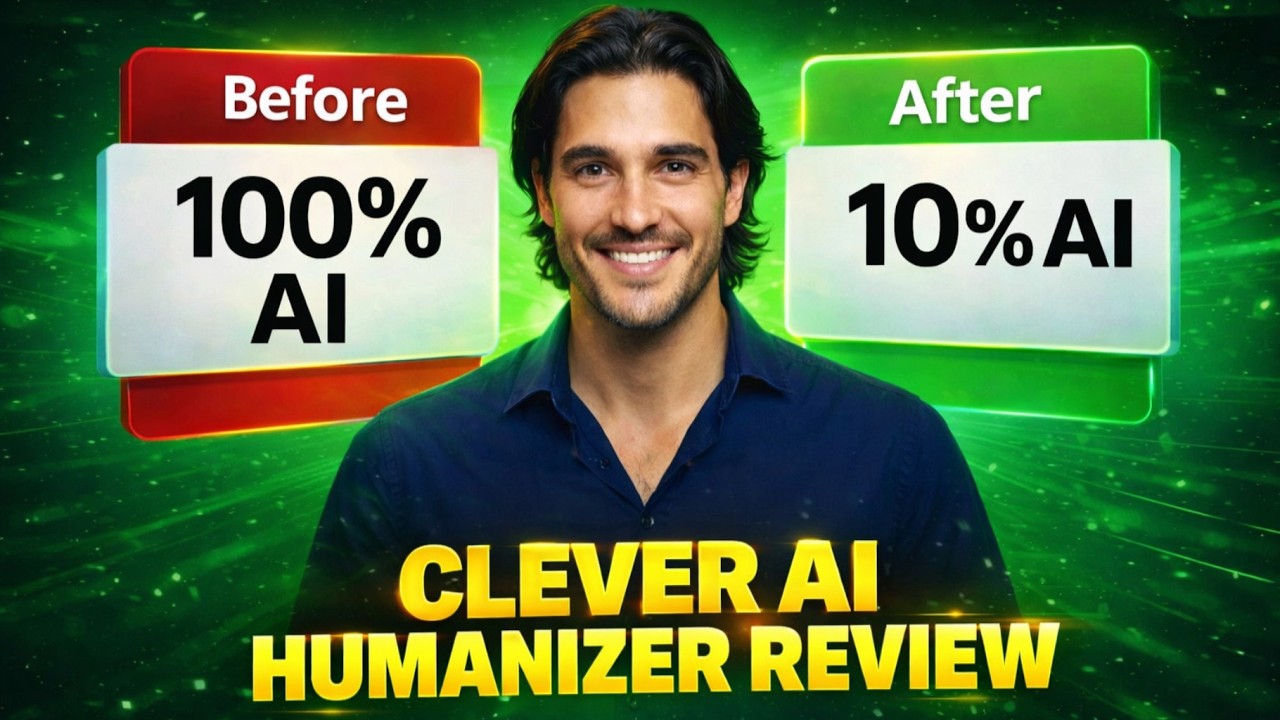
Full detailed writeup on that tool is here as well:
41 Likes
Yeah, I’ve played with Phrasly on blog stuff too, and my take is a bit mixed.
What it seems to do well
- It cleans grammar.
- It keeps tone consistent.
- For quick touch ups on social posts, it feels “good enough” on the surface.
Where it falls short for what you want
- “Human” feel
For longer blog posts, the output still reads like AI:
- Repetitive sentence rhythm.
- Overly formal connectors.
- Those stacked adjectives you see in LLM output all day.
If you compare a Phrasly paragraph to something you wrote from scratch, you can spot the difference fast. Detectors do the same thing, they look for those patterns. So if your goal is to pass as human, not only improve readability, it is weak.
- SEO impact
From my tests on a few posts:
- Time on page did not improve.
- Bounce rate stayed the same or got a bit worse on one article.
- No positive change in rankings over 4 to 6 weeks.
The big issue for SEO is not “detector scores” alone. It is:
- Does the content sound unique in your niche.
- Does it inject your point of view.
- Does it keep users scrolling.
Phrasly tends to smooth text instead of adding personality, so posts end up more generic. That can hurt user metrics over time.
-
Length and control
I had the same length inflation problem as @mikeappsreviewer mentioned, especially on “stronger” settings.
If you need tight meta descriptions, product blurbs, or Twitter threads, getting 30 to 40 percent more words than you fed in is annoying. You waste time trimming. -
Risk if you rely on it too much
If a high percentage of your site gets run through the same “humanizer,” patterns stack up:
- Similar sentence length.
- Similar wording quirks.
- Similar transitions.
At scale, this can look like templated AI content. Google cares about detectable patterns and low originality. That is more dangerous than one paragraph failing GPTZero.
What I would do if you stay with Phrasly
- Use it only as a light editor for grammar or minor rephrasing.
- Turn strength down and keep your own structure.
- After running text, manually:
- Shorten sentences.
- Swap some verbs and nouns to your usual vocabulary.
- Add 1 or 2 opinionated lines per section.
Also, paste a few samples into an AI detector you trust. Do not chase a perfect “0 percent AI” score, but if everything hits 90 to 100 percent AI, I would not push that version live.
Alternative that fits your use case
Since you mentioned blog posts and social, I had better luck with Clever Ai Humanizer. Not saying it is magic, but for:
- Lower AI flags in my checks.
- Stable wording without huge length inflation.
It did a more “human” job than Phrasly in side by side runs.
Workflow that worked best for me
- Draft in an AI editor or by hand.
- Run through Clever Ai Humanizer on a moderate setting.
- Read out loud.
- Cut fluff and add 1 or 2 personal examples or opinions per section.
- Check with one detector, then stop obsessing and ship.
If you care about SEO long term, the key is still:
- Strong topic selection.
- Clear structure with headings that match search intent.
- Your own insights and data.
Any humanizer, Phrasly or Clever, should be a helper, not your main content engine.
I’m a lot closer to @sonhadordobosque on this than to a glowing review, but I don’t see Phrasly as totally useless either.
Short version:
- As a ‘make this easier to read’ tool, it’s… fine.
- As a ‘this will make your content feel human and safe for long‑term SEO’ tool, it’s shaky.
A few angles that haven’t been hit yet:
1. Readability vs. “human-ness” are not the same thing
What Phrasly mostly does in my tests:
- Smooths grammar
- Normalizes tone
- Standardizes phrasing
That can improve readability, but it also pushes everything toward the same neutral voice. Human content usually has:
- Occasional abrupt transitions
- Inconsistent rhythm
- Tiny “flaws” like half-finished thoughts or casual phrases
Phrasly tends to iron those out. So yeah, it might read more “correct,” but also more generic. For social posts, that’s not terrible. For blog content where your voice matters, that’s a quiet disaster over time.
2. Detectors aside, pattern build‑up is your real risk
I slightly disagree with focusing too much on GPTZero / ZeroGPT results like @mikeappsreviewer did. Those tools are useful signals, but search engines are not literally using them.
The bigger problem is pattern accumulation site‑wide:
- Same transitions: “Moreover, Furthermore, In addition”
- Overuse of balanced clauses: “not only X, but also Y”
- Predictable paragraph structure: definition → explanation → generic conclusion
If you run dozens of posts through the same humanizer, that pattern becomes obvious at scale. Even if individual pieces pass some detector, your archive starts to look formulaic. That’s what can hurt you on engagement and indirectly on rankings.
3. How to actually test if Phrasly is helping you
Instead of obsessing over “is this human enough,” I’d do three quick checks:
-
Blind read test
Grab 3 paragraphs:- One raw AI or rough draft
- One Phrasly output
- One you’ve edited manually
Show them to a friend in your niche and ask: - Which is most “you”
- Which feels most generic
If Phrasly keeps winning the “generic” slot, that’s your answer.
-
Behavior metrics per post type
Compare 3–5 posts that were heavily Phrasly‑processed vs 3–5 that you edited yourself:- Scroll depth
- Time on page
- Click‑through to 1 other internal page
If those do not improve at all after a few weeks, it’s not adding real value.
-
Voice consistency check
Open 5 of your older, pre‑Phrasly posts and 5 newer Phrasly’d ones. Ask yourself:- Would a regular reader know it’s the same person?
If the newer ones feel more like “any blog on the internet,” that’s a warning sign.
- Would a regular reader know it’s the same person?
4. Where Phrasly actually makes sense
If you insist on keeping it in the workflow, I’d limit it to:
- Micro cleanups: awkward sentences, occasional paragraph smoothing
- Lower‑stakes stuff: social captions you’ll rewrite a bit anyway, simple FAQ answers
- Non‑core pages: terms, generic descriptions, internal docs
Anywhere your brand voice and originality matter, I’d keep Phrasly at arm’s length or only use it as a first pass then heavily rewrite.
5. Alternative that fits what you’re trying to do
Given your focus on “natural enough” and SEO, a more flexible tool is better than a rigid humanizer.
Clever Ai Humanizer has already been mentioned by both @mikeappsreviewer and @sonhadordobosque, and I’ll throw it in here too, but for a slightly different reason: not just detection scores, but control. In my runs, it let me keep more of my own structure and didn’t bloat the word count as much. That alone helps when you’re editing meta, intros, and social snippets.
Even then, I wouldn’t outsource your whole voice to Clever Ai Humanizer either. Best use is:
- Draft (AI or you)
- Run through Clever at a moderate setting
- Then manually inject:
- Opinions
- Examples from your actual experience
- Small contradictions or nuances most AI tools avoid
Those bits are what keep people on the page and make your stuff stand out in a crowded SERP. Phrasly tends to remove that “edge,” not add it.
Bottom line
If your question is:
“Is Phrasly enough to make my content feel human and safe long‑term for SEO?”
I’d say: as a primary tool, no. As a very light assist, maybe. But if you keep using it heavily, expect more polished sameness, not stronger human connection or noticeably better rankings.
Short version: Phrasly is fine as a grammar buffer, weak as a “this looks like a human wrote it” layer, and potentially risky at scale if you lean on it for most of your content.
I’m mostly aligned with @sonhadordobosque, @jeff and @mikeappsreviewer on the general verdict, but I think all of you are slightly over‑indexing on detectors and under‑indexing on topic quality and search intent. If your angle or outline is generic, no humanizer is going to save that piece in the long run, no matter how good it looks to GPTZero.
Here is how I’d look at it.
1. What Phrasly is actually doing to your content
From tests on long‑form posts and a few email sequences:
Pros
- Cleans grammar and fixes obvious awkward phrasing.
- Keeps tone reasonably consistent inside a single piece.
- Decent at turning raw AI gibberish into something you can at least edit.
Cons
- Flattens voice: your natural spikes and quirks get sanded off.
- Reintroduces very “LLM-ish” phrasing patterns, especially in transitions.
- Inflates length in a way that rarely adds substance, just more fluff.
This is where I slightly disagree with the heavy detector focus: your real problem is that Phrasly is normalizing your writing into the kind of safe, middle‑of‑the‑road style that users skim and forget.
2. SEO impact: think “perceived expertise,” not only AI vs human
Instead of asking “will Google detect this,” ask:
- Does this article sound like it comes from someone who has actually done the thing?
- Are there phrases, examples or opinions that would never appear in a generic answer?
- Would a competitor in your niche realistically write the same post?
Phrasly tends to wash out that edge. So even if rankings do not crash overnight, you lose:
- Long‑tail keyword opportunities that come from specific anecdotes.
- Internal link hooks, because the copy becomes less layered and more surface‑level.
- Natural “sticky” lines that get quoted or shared.
I agree with @jeff that pattern accumulation is the bigger long‑term risk, but I’d add that “topical sameness” is just as harmful. If twenty sites all publish smoothed‑over AI takes on the same topic, the one with actual lived detail wins.
3. How I would evaluate Phrasly differently from what’s already suggested
Instead of more detectors or more blind tests, I’d run three checks that map directly to SEO and user value:
-
Search intent alignment check
Take a Phrasly‑processed article and compare it to the top 5 results for that query. Ask:- Did Phrasly accidentally remove sections that directly answer sub‑questions people actually search for?
- Did it “harmonize” your headings into vague H2s like “Benefits” or “Conclusion” instead of specific, query‑matching ones?
-
Quote‑worthiness test
Grab 10 random paragraphs from your Phrasly posts and 10 from your older, fully human posts. Which ones contain lines that could stand alone as a quote in someone else’s article or tweet?
If Phrasly text almost never produces those, it is not helping your content stand out. -
Internal linking density
I often see humanizers reduce the density of “niche hooks” that make internal linking easy. If, after Phrasly, you find fewer natural spots to link to older guides, that is a quiet SEO loss.
4. Where Phrasly is actually fine to use
I would not bin it entirely. It can be OK for:
- Draft cleanups for non‑pillar content like small announcements or simple social copy.
- Quick polishing of outreach emails.
- Internal docs where style does not matter.
I would avoid it on:
- Long‑form blog posts that you hope to rank for competitive terms.
- Sales pages or key landing pages where voice and persuasion matter.
- Any content cluster where you already see monotone style creeping in.
5. Clever Ai Humanizer vs Phrasly in practice
Clever Ai Humanizer has been mentioned already, but not really broken down. From side‑by‑side runs:
Clever Ai Humanizer pros
- More control over how “heavy” the transformation is.
- Less aggressive length inflation, which helps keep intros tight and meta text usable.
- Tends to keep structure closer to your original outline, so your heading strategy survives.
- In my experience, slightly more variation in sentence rhythm than Phrasly, so the result feels less templated.
Clever Ai Humanizer cons
- Still not a magic “you now sound human” button. If your base text is bland, it will stay bland.
- Can occasionally swing too casual or too neutral, which means you still need a human pass to tune tone.
- If you run everything through it, you will still build detectable style patterns at scale, just different ones from Phrasly.
- You can get overconfident in its “humanizing” and skip adding your own specific examples, which is where real SEO value lives.
I see it less as a replacement for your editing and more as a way to get a “clean, editable draft” that you then inject with:
- Niche‑specific vocabulary.
- Your own failures, mistakes, and counterpoints.
- Data points or screenshots that only come from actually doing the work.
Used like that, Clever Ai Humanizer is a better fit than Phrasly for what you want: readability that does not totally erase personality.
6. Concrete decision rules for your situation
If you are unsure whether to keep Phrasly in the stack, try this:
- Keep using it only for: social captions you would have written in 30 seconds anyway and internal docs.
- For 3 upcoming blog posts, skip Phrasly and instead draft, run through Clever Ai Humanizer lightly, then manually add:
- A personal story
- One strong, non‑generic opinion
- At least one concrete example or mini case study
Then compare after 4 to 6 weeks:
- Engagement metrics and scroll depth.
- How often those pieces attract comments or replies.
- How confidently you can say “this sounds like me.”
If the non‑Phrasly posts clearly win on any of those, you have your answer: Phrasly is not killing your site, but it is capping your ceiling.
In other words, Phrasly is OK as a safety net for grammar. It is a poor main strategy for sounding human or building an SEO moat. Clever Ai Humanizer can be a more flexible mid‑layer, but the actual “humanization” is still on you: your angles, your stories, your willingness to say something specific.
Your take is solid. Phrasly cleans text, flattens voice, risks sameness and weak user metrics. Simpler fix, dictation rewrite. Read the draft, then close it. Explain the post to one reader out loud for 3 minutes, record on your phone. Transcribe, keep your phrasing, cut 15 percent. Target FK grade 6 to 8. Mix sentence lengths, 40 percent under 12 words, 40 percent 12 to 18, 20 percent over 18. Add one number or example per section. Publish, compare scroll depth and time on page in 2 weeks. It feels human. It is fast. It works. Dont overthink teh tools.