My USB drive suddenly stopped opening after I moved important photos and work files onto it, and now my computer says it needs to be formatted. I’m trying to find the best USB data recovery tool for Windows that can recover files without making things worse. If you’ve used reliable USB flash drive recovery software, I’d really appreciate your advice.
I’ve screwed this up more than once. Deleted the wrong folder, formatted the wrong USB, ignored the first warning sign, then got hit with the lovely “you need to format the disk” message. And since Windows does not send USB deletions to the Recycle Bin, it feels like your stuff got erased on the spot. A lot of the time, it didn’t. The file table got wrecked, or the paths vanished, while the raw data stayed behind.
If the flash drive is physically damaged, cracked board, dead controller, burnt chip, then software is your first thing to try before paying a recovery lab. Labs cost a lot. Software costs less, and for a normal USB mess, deleted files, RAW filesystem, bad format, it often does enough.
For people who want the least painful route, I kept ending up with Disk Drill. I started using it after one of those junk promo thumb drives died on me with school and project files on it. Not a fun night.
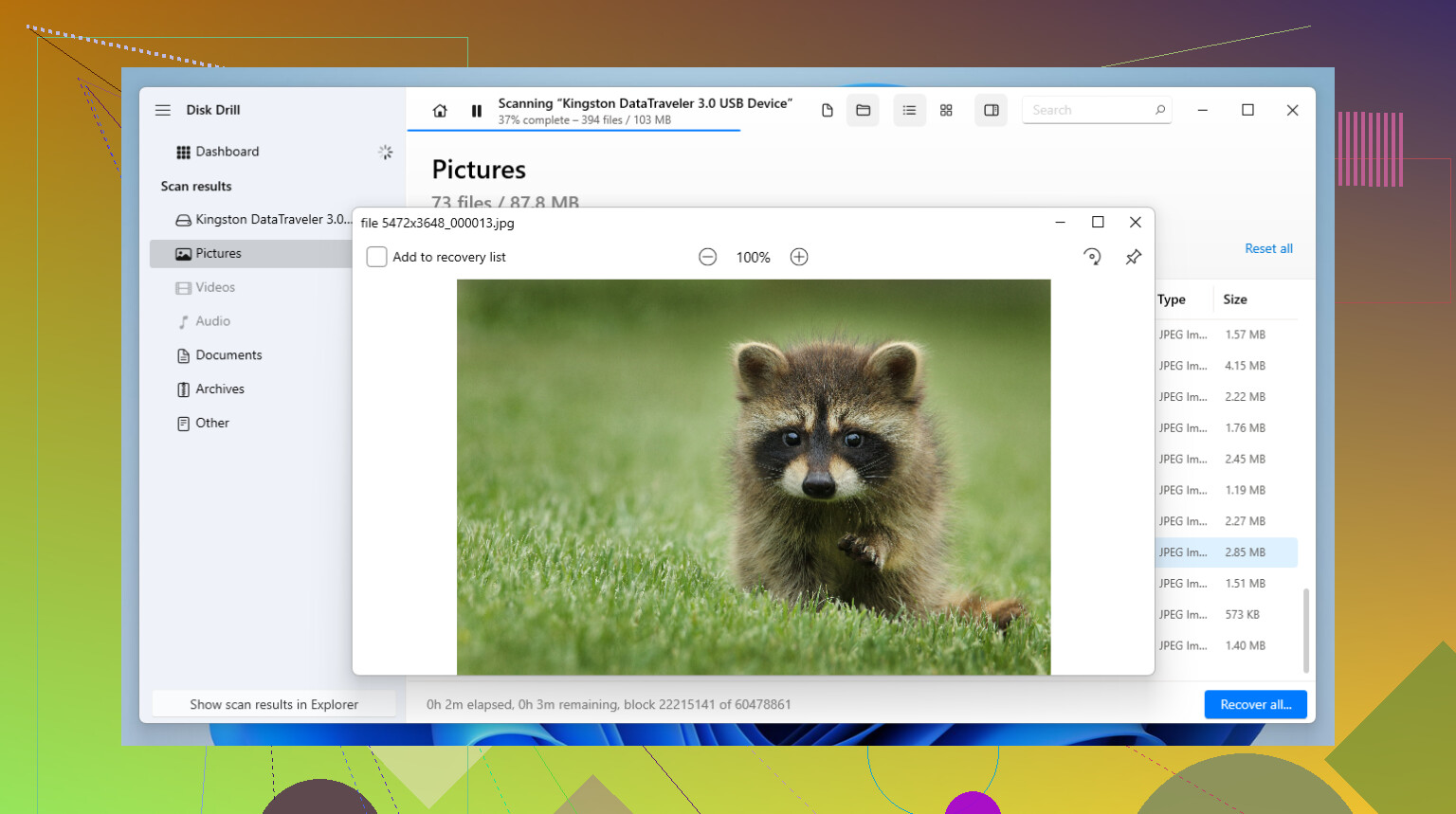
What I liked on USB jobs was the scan behavior. A lot of flash drives are FAT32 or exFAT, and Disk Drill handles both well from what I saw. It looks for file signatures, so even when the filesystem is damaged or the drive shows up as RAW, you still get a shot at pulling files out. The preview feature matters more than people think. I’ve sat through long scans before, only to recover broken garbage. Preview saves time. You get to check photos, docs, and some media before writing anything out.
Another part people skip over is disk imaging. If your USB disconnects, freezes, or acts weird when touched, make a byte-for-byte image first, then scan the image. Don’t keep hammering the original stick. That extra stress is how a bad drive gets worse.
If you know your way around recovery tools and don’t mind an old-looking interface, R-Studio is the one I’d put in the serious pile. It’s dense. Menus everywhere. Lots of jargon. It feels built for people who already know what a damaged partition map looks like. But when a drive is in rough shape, missing partitions, ugly corruption, messed up structure, it gives you more room to work. For a simple deleted folder, I would not bother. For a bigger disaster, I would.
If you want free tools, these are the usual ones, with limits.
- Recuva
Good for a plain undelete job. If you removed a file recently and did not keep using the drive, Recuva has a fair shot. It’s small, easy, and free for normal use. Where it falls apart is formatted drives and RAW cases. I’ve had it work on “oops, deleted it” and fail hard on “the stick is now unreadable.”
- PhotoRec
This one is ugly and useful. No polished interface. No point-and-click comfort. It scans by file signature and pulls back a lot, sometimes a lot a lot. The tradeoff is brutal. You lose original names and folder layout, so you end up sorting giant piles of files named like f12345.jpg and recup_dir nonsense. If your budget is zero and your patience is decent, it still earns a spot.
A few things I learned the hard way:
- Stop using the USB the second you notice files are missing.
Pull it out. Don’t browse it again. Don’t copy random stuff onto it. Don’t let the system keep writing temp junk in the background. Old data gets overwritten quietly, and once those sectors are reused, you’re done.
- Recover to another drive.
This is where people ruin their own recovery. If the dead files are on the USB, save recovered data to your internal SSD, external hard drive, anywhere else. Writing recovered files back onto the same flash drive is asking for overlap and loss.
- Check trial limits before you get invested.
A lot of freemium recovery apps give you a small recovery allowance. Disk Drill usually offers a limited amount on Windows, often around 100MB. Use that small window to test the files you care about most. Open them. Play them. Make sure they aren’t broken. I’d do this before paying for anything.
One more thing. If the USB does not appear at all, not in File Explorer, not in Disk Management, not anywhere useful, then software has less to work with. At that point you might be dealing with hardware failure, and that turns into a different problem.
For the common cases though, accidental delete, format, RAW flash drive, lost partition, software recovery is where I’d start. It’s the first thing I’d try, and yeah, I’ve had to do this more than once.
23 Likes
Skip anything write-related to the USB. No format, no chkdsk, no error checking. Those tools love to make things worse.
I agree with @mikeappsreviewer on one part, Disk Drill is a solid first pick on Windows for a RAW or unreadable USB. I disagree a bit on Recuva, I would skip it here. Recuva is fine for simple deletes. Your case sounds like file system damage, not a clean delete.
What I’d do:
- Check Disk Management. See if the USB shows correct size.
- If it shows up, make an image first if the drive drops out or hangs.
- Scan the image, not the stick, if possble.
- Try Disk Drill first for photos and docs.
- If Disk Drill finds folder structure, recover the most important stuff first.
- If results look messy, test UFS Explorer or R-Studio next.
UFS Explorer gets less hype, but on busted FAT/exFAT sticks it sometimes pulls cleaner folder trees than cheaper tools. It costs more, but for work files I’d care more about results than nice UI.
Also, here’s a solid roundup of Windows recovery options, best data recovery software for USB drives, SSDs, and hard drives.
If the USB does not appear in Disk Management at all, stop with software. That points more toward hardware failure.
If Windows is saying “you need to format the disk,” I’d be careful with some of the usual advice. I actually would not jump to chkdsk or any Windows repair tool first, because those can “fix” the file system by nuking the parts you wanted back. Been there, regretted that.
@mikeappsreviewer and @viajantedoceu are right about starting with recovery software, but my take is this: for a normal unreadable USB on Windows, Disk Drill is probably the most practical first try because it’s fast to test and the preview is useful. What matters is not just “it found 20,000 files,” but whether your photos and docs actually open.
A couple things I’d add that people forget:
- Try a different USB port and another PC first. Sounds basic, but sometimes the issue is dumb, not fatal.
- If Device Manager sees it but Explorer doesn’t, that’s still recoverable more often than ppl think.
- If the drive gets very hot, disconnects randomly, or makes the system freeze, stop messing with it. That leans hardware-ish.
If Disk Drill gives messy results, I’d actually try DMDE before paying more for heavier tools. It’s uglier than sin, but sometimes it reconstructs partitions surprisingly well. Not beginner-friendly tho.
Also, if you want a simple walkthrough, this step by step USB drive file recovery guide is worth a look.
Short version:
- Do not format it.
- Do not save anything new to it.
- Scan with Disk Drill first.
- Recover files to a different drive.
- If the USB is missing even in Disk Management, software may not help much.
That’s the annoying truth. Sometimes recovery is easy, sometimes the cheap flash controller just decides today is the day it becomes trash.
Skip one thing the others only touched lightly: check the USB’s SMART-like behavior is impossible on most flash drives, so your best clue is stability. If it stays connected long enough to scan, software is worth trying. If it keeps dropping, that’s when I’d stop sooner than @mikeappsreviewer suggests and consider the drive itself suspect.
My take:
- Disk Drill is a good first-pass tool on Windows for this exact “needs formatting” mess.
- Pros: easy UI, strong photo/doc preview, decent RAW/exFAT/FAT results, fast enough to test viability.
- Cons: not cheap if you need full recovery, can return lots of extra junk from deep scan, and sometimes the reconstructed folder tree is less clean than more advanced tools.
Where I slightly disagree with @viajantedoceu and @kakeru: I would not jump between too many apps right away. Every long scan stresses a flaky USB. Pick one sensible tool first, recover the highest-value files, then reassess.
If you want a practical order:
- Test on another PC and USB port.
- If Disk Management shows the correct capacity, scan it.
- Start with Disk Drill because it’s the easiest way to confirm whether your photos/docs are actually recoverable.
- Recover only to a different drive.
- If results are chaotic, move to R-Studio, UFS Explorer, or DMDE for a second opinion.
If the capacity shows as 0 bytes, wildly wrong size, or the stick disconnects during reads, software odds drop hard. That’s the point where “best recovery tool” matters less than “is the hardware dying?”