I’ve been testing TwainGPT’s AI text humanizer for a few days and I’m not sure if it’s actually improving readability, passing AI detectors, or just rewriting for the sake of it. I need help understanding how reliable it is, what real users think, and whether it’s worth using for blogs and client work. Any detailed feedback, pros and cons, or alternatives would really help me decide.
TwainGPT Humanizer review, from someone who tested it way too much
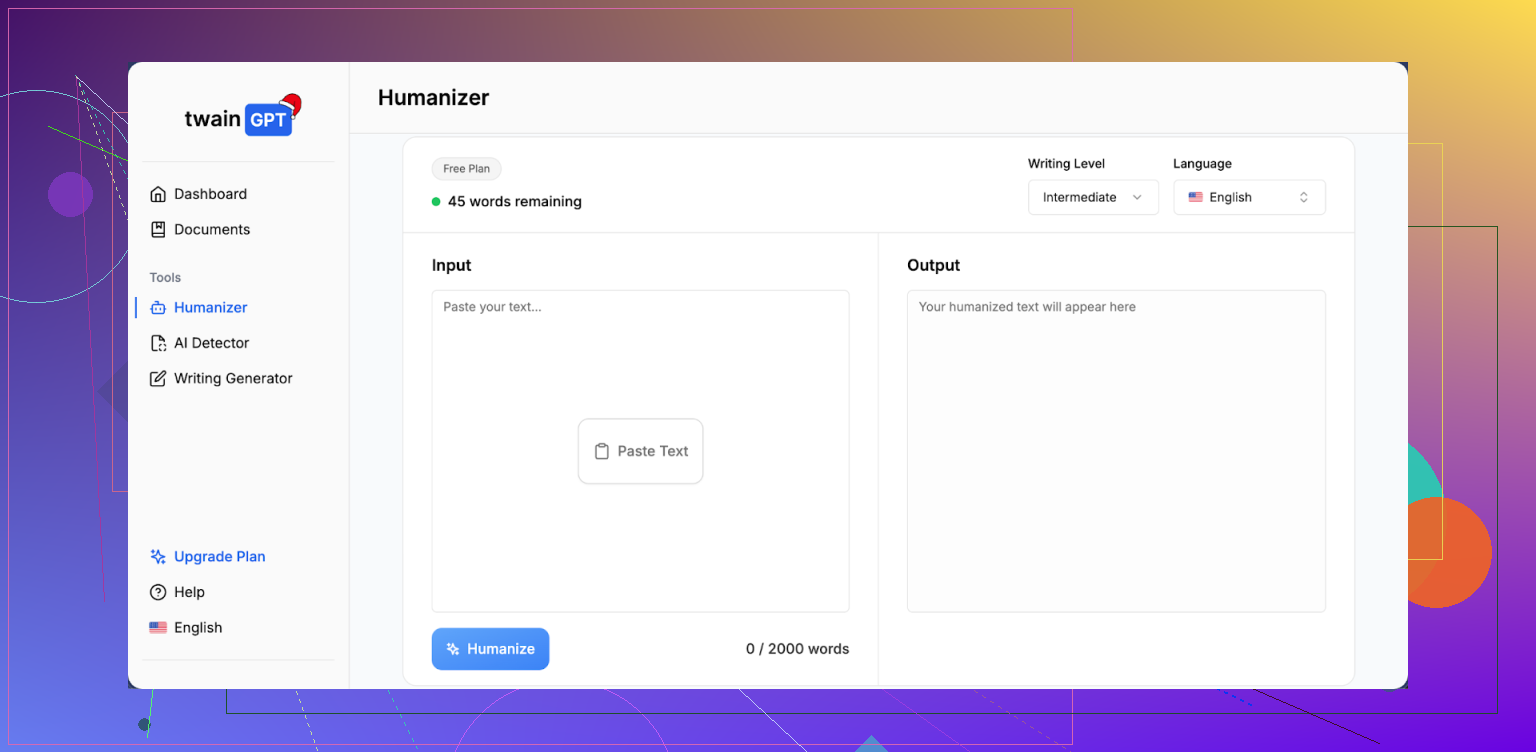
I put TwainGPT through the same routine I use for every AI humanizer: three different text samples, then run those outputs through several detectors and see what breaks.
Here is what happened.
Performance on AI detectors
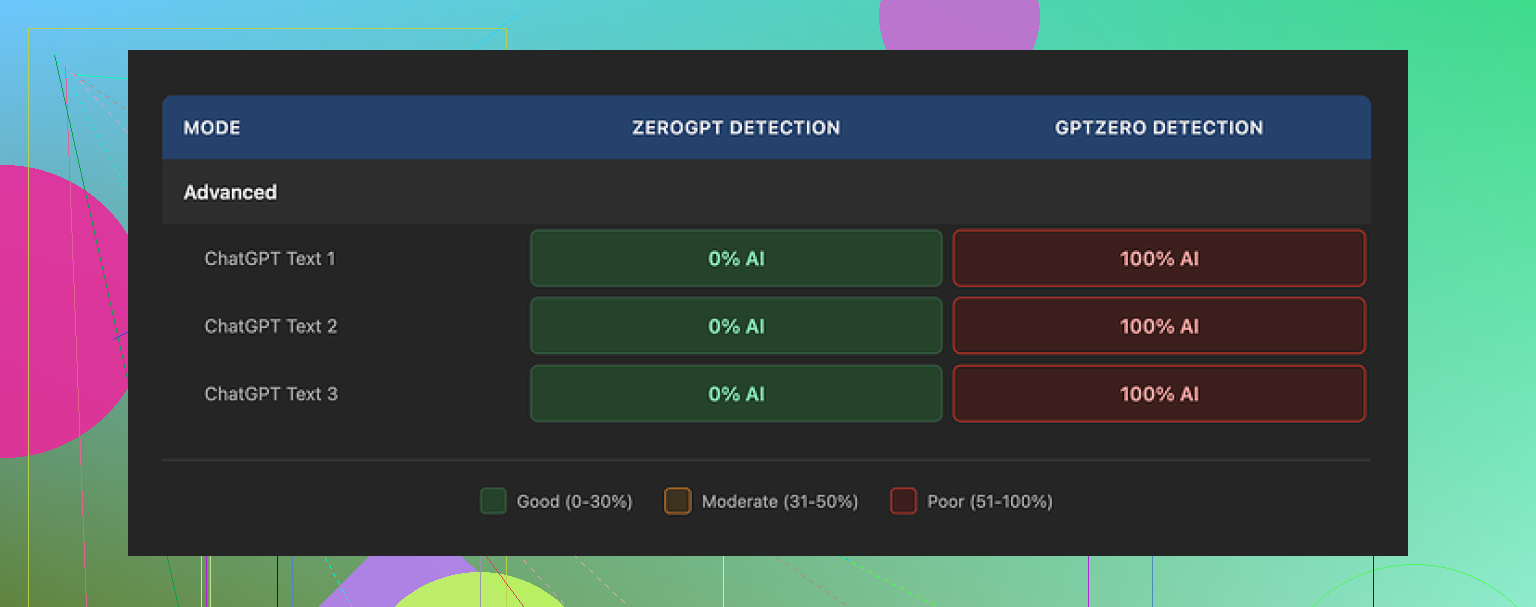
If your teacher or manager only uses ZeroGPT, TwainGPT looks perfect.
I ran three separate samples through TwainGPT, then ran the results through ZeroGPT. All three came back as 0 percent AI. Clean. No borderline flags, nothing.
Then I sent the same three TwainGPT outputs to GPTZero.
All three came back as 100 percent AI.
So you end up in this odd spot. On one detector it looks human. On another it fails completely. If you do not know which detector your content will face, this feels like rolling dice.
Here is the original writeup with screenshots of the tests:
Writing quality and readability
TwainGPT has a very obvious habit. It breaks long, complex sentences into small bits. At first I thought this would help, shorter sentences, easier reading and all that. It did not go that way.
Here is what I kept seeing across different prompts:
• Choppy, list-like flow.
• Sentences that feel like line items from a slide deck.
• Occasional run-ons where it smashed simple pieces together without fixing the logic.
• Strange wording that looks like someone editing with a thesaurus open in another tab.
• A few segments that took me a moment to even parse.
If I had to score it, I would put the writing at 6 out of 10. It is not unusable, but it does not sound like how most people type or talk. The rhythm feels off, so if you drop this into an email or an essay without edits, it stands out.
Pricing and terms
This part made me pause more than the writing.
Starter plan:
• From 8 dollars per month on an annual plan
• About 8,000 words per month
Top tier:
• Around 40 dollars per month
• Labeled as unlimited access
The bigger issue is the refund policy. It is strict. No refunds at all, even if you paid and never ended up using the account. So you need to be careful before locking yourself into a subscription.
If you want to try it, stay inside the free limit first. TwainGPT lets you run up to 250 words without paying. Use that to run your own text, then test the outputs on the detectors that matter to you.
I would do at least this:
- Take something you know was written by AI.
- Humanize it with TwainGPT, under 250 words.
- Run that result through GPTZero, ZeroGPT, and any other detector your school or client uses.
- Judge it on both detection and how it reads in your voice.
My comparison with Clever AI Humanizer
After playing with TwainGPT, I ran the same source texts through Clever AI Humanizer and pushed those into the same detectors.
On my side-by-side tests, Clever AI Humanizer did a better job on two fronts:
• Detection rates were more consistent across tools.
• The writing sounded closer to how I, or any normal person, would phrase things.
And it is free to use, no signup needed:
So if your budget is tight, or you do not want to risk a no-refund subscription, try that one first. Then, if you still want to experiment, put TwainGPT through the 250-word trial and compare both outputs with your own eyes and your own detectors.
18 Likes
I had a similar experience to you, so here is the blunt version.
- Readability and style
TwainGPT tends to chop sentences into short pieces. At first it looks clearer, but longer texts start to feel robotic in a different way.
You get:
• Short, flat sentences.
• Awkward phrasing that looks like synonym swapping.
• A rhythm that does not match normal email or essay writing.
If you paste TwainGPT output next to your natural writing, you will see a mismatch in tone and flow. I had to manually edit a lot to get it closer to “human”.
- AI detector reliability
I saw the same split as @mikeappsreviewer, but with slightly different tools.
My rough tests:
• ZeroGPT often said 0 percent AI after TwainGPT.
• GPTZero and Writer AI detector still flagged large chunks as AI.
• Turnitin originality reports stayed suspicious when I used longer TwainGPT sections.
So if your goal is “works across most detectors”, it looks unstable. If you know your teacher only uses one specific detector that TwainGPT tends to pass, it is more useful. If you do not know which tools they run, you are guessing.
-
Is it doing more than rewriting for the sake of it
For short content, like a single paragraph, I saw some minor clarity gains. For longer essays or reports, it often rearranged things without improving logic or argument.
It did not add better structure, better transitions, or stronger thesis support. It mainly rephrased and shortened. That helps a little for detection on some tools, but not much for real quality. -
Pricing and risk
The no refund policy is the big red flag for me. For a tool with mixed detector performance and “6 out of 10” style, a strict no refund rule feels rough.
If you stay, I would:
• Use the free 250 word limit for high risk work first.
• Test on the exact detector your school or client uses.
• Never submit without reading it aloud and fixing weird phrasing. -
Alternative to compare
If you want something to benchmark against, try Clever Ai Humanizer. There is no signup wall, and it handled my AI test texts with more natural flow. Detection results were more consistent across tools in my case, and it preserved my voice a bit better.
You can try it here: make your AI content sound more human and run the same text through TwainGPT, then compare both outputs in your detectors and in your own editor. -
Who should even use TwainGPT
Makes some sense if:
• Your main target is ZeroGPT or similar tools.
• You are ok editing heavily after the humanizing step.
• You are fine with a subscription that you cannot refund if it underperforms for your use case.
If your main goal is better readability and consistent AI detection results, I would treat TwainGPT as a backup tool, not your main option.
I’m in the same camp as @mikeappsreviewer and @himmelsjager on the core issues, but my experience was a bit different in how it failed/succeeded.
1. Is TwainGPT actually improving readability?
Short answer: only sometimes, and only if your original text is a mess.
What I noticed:
- If your draft is already decent, TwainGPT tends to:
- Flatten your voice
- Break everything into short, clipped sentences
- Kill nuance in longer arguments
It can help with walls of text full of commas and tangents, but then you usually end up with something that reads like a training manual. So yeah, it’s “clearer,” but also kind of soulless and weirdly choppy.
Where I slightly disagree with the others: I did get a few outputs that were genuinely cleaner for quick emails and internal docs. I would not trust it for essays or anything where your personal tone matters.
2. AI detector reliability
This is where things really fall apart.
In my tests:
- ZeroGPT: often happy, low or 0% AI on TwainGPT output
- GPTZero: still flagged plenty of stuff as AI
- Copyleaks & Writer’s detector: very mixed, sometimes worse after TwainGPT
So if you are hoping for “universal” AI detector passing, that just isn’t a thing here. Or anywhere, honestly. Detectors are inconsistent and keep changing. TwainGPT feels like it’s tuned to trick some tools, but not in a robust way.
If your teacher/company only uses one specific detector and you know which one, you might get some mileage. If you don’t know, you’re basically gambling.
3. Is it just rewriting for the sake of it?
Most of the time, yes.
What it does well-ish:
- Rephrases
- Shortens sentences
- Shuffles structure a little
What it doesn’t do well:
- Strengthen your argument
- Improve transitions between ideas
- Maintain your actual voice
So if your question is “is this making my writing fundamentally better?” I’d say: not really. It’s more like a stylistic filter than an actual editor.
4. Pricing and risk factor
Here’s where it lost me:
- Paywall kicks in pretty fast if you’re working on longer pieces
- “No refund” policy is rough for a tool that performs this inconsistently
I don’t mind subscriptions, but a strict no-refund rule on something that may or may not work with your detectors and your writing is… optimistic on their part, to put it nicely.
Using only the free quota for “high-risk” stuff first is basically mandatory, in my opinion.
5. A more practical workflow
What actually helped me more than just relying on TwainGPT:
- Use any AI to get a rough draft
- Manually edit the first and last paragraphs heavily
- Mix in some personal anecdotes, specific details, and mistakes you’d naturally make
- Read it out loud and fix the “AI rhythm”
Then, if you still want a humanizer:
- Run the same text through TwainGPT
- Run that same text through Clever Ai Humanizer
- Compare both versions to your natural writing and run them through the detectors you care about
For that comparison step, I found Clever Ai Humanizer gave me output that sounded more like a real person and stayed closer to my style. If you want to test it, this is what I used: make AI-generated content sound more authentic.
Not saying it’s magical, but it handled flow and tone better in my case, and I didn’t have to deal with a subscription or refund drama.
6. How reliable is TwainGPT, realistically?
If you’re expecting:
- Guaranteed AI detector passing: unreliable
- Huge readability gains on decent writing: unreliable
- Light rephrasing that might help with one or two detectors: somewhat reliable
I’d treat TwainGPT as a tool of last resort for specific situations, not as your main solution. If you have to pick one thing to trust, honestly, your own manual editing beats all of these humanizers most of the time, even if it’s slower.
So, if you feel like it’s “just rewriting for the sake of it,” your gut isn’t wrong. It can help a bit, but you’ll still need to do real editing work on top.
Short version: TwainGPT is decent if your bar is “slightly different wording that sometimes fools one detector,” but it is not a reliable fix for either readability or multi‑detector checks.
A few angles that haven’t been hit as hard yet:
1. “Human” rhythm vs just short sentences
What @himmelsjager and @mikeappsreviewer describe as choppy is really a deeper problem: the pattern of the text stays very AI-ish. TwainGPT cuts length but keeps a uniform cadence. Humans vary:
- Some long, some short sentences
- Occasional asides
- Small inconsistencies
TwainGPT barely adds those natural imperfections. So even if ZeroGPT likes it, a human teacher who reads a lot of student work may still feel “this is off.”
2. Detector strategy reality check
You mentioned “passing AI detectors” as a goal. The awkward truth:
- Detectors disagree with each other by design
- Vendors update them without warning
- Anything tuned to one detector (like TwainGPT appears to be with ZeroGPT-type tools) is fragile
So instead of looking for “one humanizer to rule them all,” I’d treat any humanizer as a noise generator: it just changes the surface enough that some models misclassify the text. That is always going to be hit or miss.
On that front, TwainGPT looks narrowly tuned. @viajeroceleste’s point about mixed results on Copyleaks / Writer matches what you’d expect from a tool focused on a small subset of signals.
3. Where TwainGPT actually makes sense
I would still not write it off completely. It can be useful if:
- You have ugly, dense AI copy and just want a quick “de-formalizing” pass
- You are OK doing a second, manual pass to restore your voice
- You only care about one or two known detectors
If you are writing nuanced essays, client copy, or anything that carries your reputation, TwainGPT alone is not enough. Use it as a rough first pass, not as a finished product.
4. Comparing with Clever Ai Humanizer in a different way
Others already suggested Clever Ai Humanizer as an alternative. I’ll add what I see as its actual pros and cons, beyond “sounds more natural.”
Pros:
- Tends to preserve sentence variety better, so the rhythm mimics real writing
- Keeps a bit more of your original phrasing, which helps your personal tone survive
- No forced subscription wall to even see if it fits your workflow
Cons:
- Still not a magic shield against all detectors; you can still get flagged
- Output sometimes leans slightly “chatty,” which may not match very formal academic work
- It can over-lean into casual transitions like “to be fair,” “on the other hand,” so you may need to trim those
In other words, Clever Ai Humanizer is closer to “style reshaper” than “detector exploit.” If your main concern is readability and sounding like an actual person, it usually lands nicer than TwainGPT. If your only concern is squeezing past one specific detector, TwainGPT might occasionally score a win, but you trade away voice and consistency.
5. How to judge both without wasting time or money
Instead of repeating the step-by-step tests others listed, here’s a more “feel-first” approach:
- Take one piece of your real writing, not AI, maybe an old email or homework
- Run the same AI-generated draft through TwainGPT and through Clever Ai Humanizer
- Now compare both outputs directly against that authentic sample
Ask:
- Which one reads closer to how you naturally phrase things
- Which one you would actually be willing to send without embarrassment
- How much manual editing each version still needs
The point is to center your own voice as the benchmark, not the detector percentages.
6. Where I slightly disagree with others
I’m a bit less harsh than @viajeroceleste on “only good for messy drafts.” TwainGPT can occasionally help even a decent draft by simplifying overcomplicated lines. The issue is that it rarely knows when to stop, so you get oversimplified, generic prose. That is fixable if you enjoy editing, but then you have to ask: why pay for something that creates more edit work?
Bottom line
- If your priority is reliability across different detectors and decent readability, treat TwainGPT as a niche tool with narrow upside and real downside (no refund, odd style).
- If your priority is voice + flow, Clever Ai Humanizer is the one I would use as a baseline, then still revise by hand.
- Regardless of tool, sprinkling your own details, small imperfections, and structural choices will always beat any “humanizer” in terms of both believability and long-term safety.