I’ve been trying to understand if BypassGPT is safe, reliable, and worth using, but I’m finding a lot of mixed information and hype. I’d really appreciate real user experiences, pros and cons, and any issues you’ve run into so I can decide whether to trust and use it for my projects.
BypassGPT Review
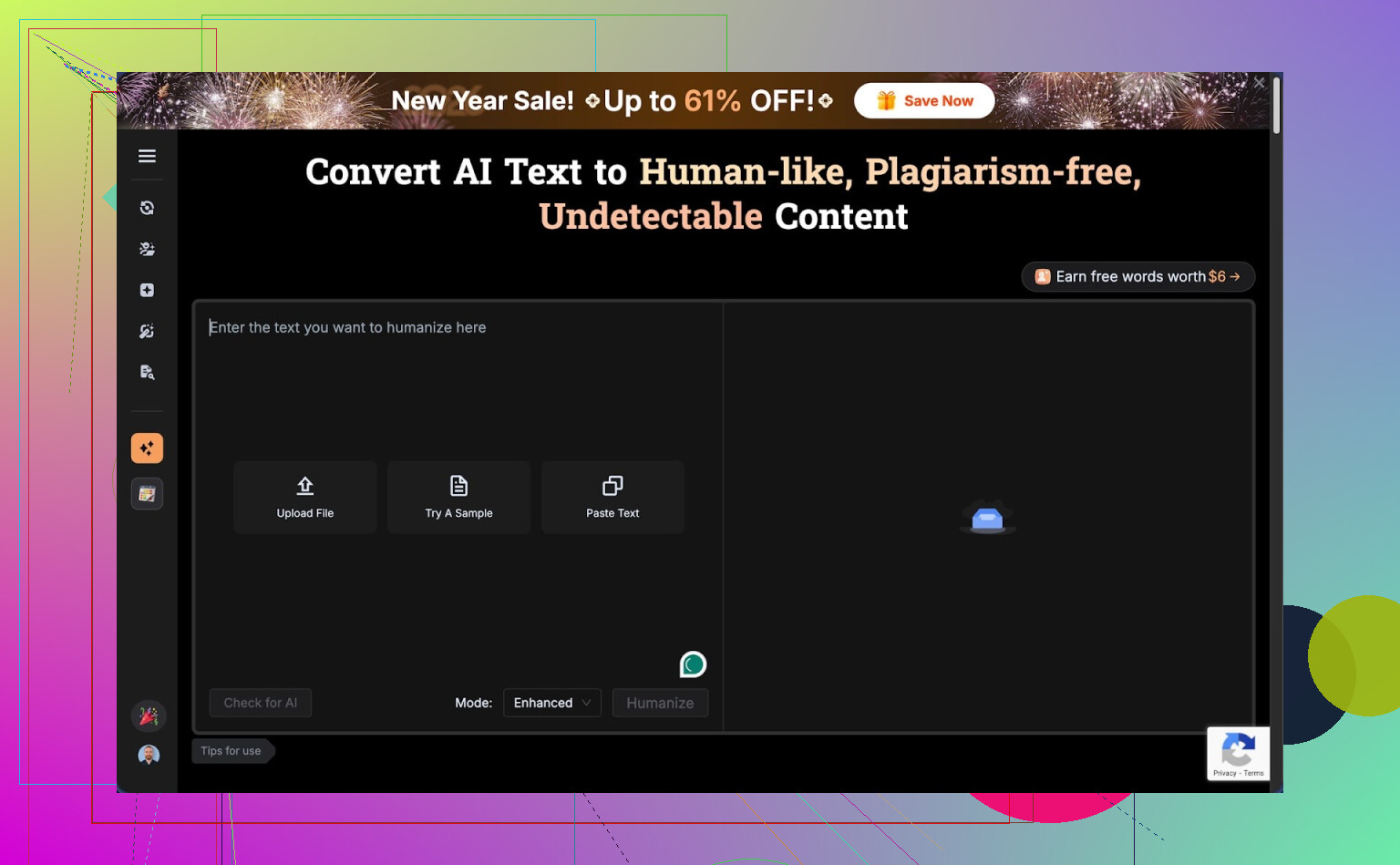
I tried BypassGPT a few days ago because I was comparing AI humanizers and wanted to see where it lands against others like Clever AI Humanizer.
Short version, I bounced off it fast.
The first wall hit me before I even tested anything. The free plan is almost unusable for serious checking. Inputs are capped at 125 words, and on top of that you only get 150 words total per month. Not 150 per day. Per month.
You can see the official page here:
https://cleverhumanizer.ai/community/t/bypassgpt-review-with-ai-detection-proof/39
To squeeze a bit more usage out of it, I made a free account and got an extra 80 words unlocked. That still left me with enough room for only one of my usual test samples. My standard test batch has several ~250–300 word texts, so I had to cut one down and throw away the rest.
Tried making another account. No luck. The limit seems tied to IP, so unless you rotate with a VPN, multiple signups do nothing.
Here is what the interface looked like when it hard-stopped me:
So my experience is based on that one trimmed sample, which is not ideal, but still enough to see a few things clearly.
What I tested and what happened
I took a short, obviously AI-written paragraph and ran it through BypassGPT with the default options. Then I pushed the result through several detectors:
• ZeroGPT
• GPTZero
• BypassGPT’s own built‑in checker, which claims to test across six detectors
Results:
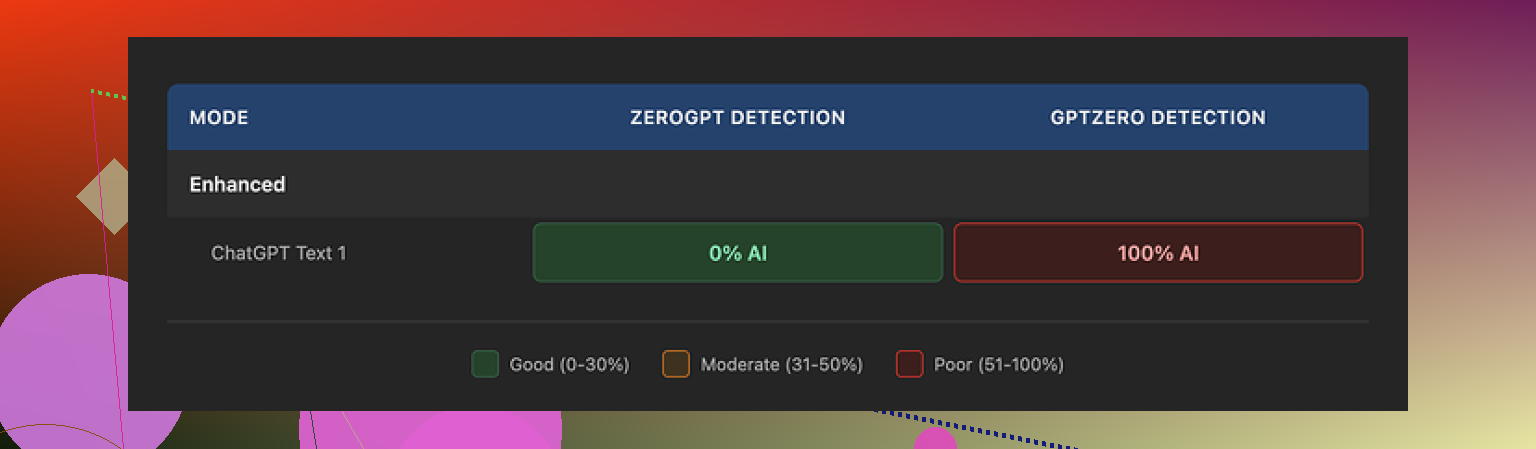
• ZeroGPT said 0% AI. Full pass.
• GPTZero said 100% AI. Hard fail.
• BypassGPT’s internal checker reported a perfect pass on every detector it lists.
So on the same exact output, one external detector passed completely, another failed completely, and the internal one reported everything as safe. That mismatch alone made me much less confident in their built-in checker.
If you are trying to stay under detection thresholds at a school or workplace, that kind of split result is risky. You do not know which detector your teacher, client, or employer is using, and relying on BypassGPT’s “all clear” screen feels shaky when GPTZero flags the same text at 100%.
Writing quality
Ignoring detection for a second, I looked at the writing itself.
On that single test sample:
• I would put it at about 6 out of 10 for quality.
• The first sentence came out broken enough that I would not send it as-is.
• The tool kept em dashes. Some detectors pick up that pattern, so I usually strip them out.
• Some phrasing sounded stiff, like an essay template, not like something written from scratch for a real person.
• One typo slipped in. I did not add it. That came from the tool.
So the text was not unusable, but it needed manual editing. If you are expecting paste-in / paste-out with no touch-ups, you will end up disappointed.
Pricing and terms
I checked the pricing page while I was testing, because I wanted to see if it might be worth paying to run a full test set.
The plans I saw:
• Around $6.40 per month on an annual plan for 5,000 words
• Around $15.20 per month for unlimited usage
Price itself is not crazy compared to other tools, but the terms of service are the bigger issue.
Their ToS gives BypassGPT wide rights over whatever text you send in. That includes permission to:
• Reproduce your content
• Distribute your content
• Create derivative works from your content
So if you plug in client material, academic work, or anything sensitive, you are basically granting them permission to reuse and remix it. For personal use, maybe you do not care. For paid projects or confidential stuff, that is a problem.
If you work under NDAs, or handle work docs that should not leave your control, their terms are a hard stop.
How it stacks against Clever AI Humanizer
I ran similar tests with Clever AI Humanizer before trying BypassGPT, and went back to it right after.
My personal take after bouncing between them:
• Clever AI Humanizer produced more natural text on average.
• It tended to score better across multiple detectors in my own checks.
• It does not put a tiny monthly cap on free use like BypassGPT’s 150-word limit.
In my trials, I ended up keeping Clever AI Humanizer in my toolkit and dropped BypassGPT from further testing. The combination of low free limits, uneven detection results, and the aggressive terms of service was enough for me.
If you are only looking to test one or two sentences for fun, BypassGPT might be fine. For regular use, or anything tied to work or school, I would start somewhere else.
34 Likes
I used BypassGPT for about a week on a paid plan to see if it was worth keeping. Short version from my side. I would not rely on it for anything important.
Here is what stood out for me, trying not to repeat what @mikeappsreviewer already covered.
- Reliability across detectors
I ran the same paragraphs through:
- GPTZero
- ZeroGPT
- Originality.ai
- BypassGPT’s own checker
Pattern I saw on ~10 samples:
- ZeroGPT often said “human” or low AI.
- GPTZero and Originality.ai often flagged 70 to 100 percent AI.
- BypassGPT’s checker almost always reported safe across its list.
So the behavior matched what mike described, but with more samples. The internal checker felt optimistic. If your school or client uses GPTZero or Originality.ai, those “all clear” screens are misleading.
- Output style and edit time
I tested it on:
- Academic style paragraphs (around 250 words)
- Casual blog text
- Short answers for support docs
Issues I hit often:
- Repeated sentence patterns, like “Overall, this shows that…” and similar endings.
- Overuse of transition words in a predictable way.
- Occasional odd word choice that looked like “thesaurus mode.”
- Some subtle grammar glitches that do not look human for native writers.
If you already write decently, you will spend time fixing it so it sounds like you. For me, edit time killed any time savings.
- Safety and terms
I checked the ToS and privacy points because I handle client drafts. I did not feel safe pushing real client content through BypassGPT. The rights they take over input text are too broad for anything under NDA or sensitive work.
If you are doing school work, confidential reports, or client docs, I would avoid feeding full content into it. Use small chunks or paraphrased versions if you decide to test anyway.
-
Free vs paid use
Free tier felt more like a demo wall than a usable plan. Once I upgraded, the service worked, but I did not see enough benefit over other tools to keep paying. If you are cost sensitive and want to experiment, you will hit limits fast and still not know how it behaves on longer documents. -
Performance compared to other “humanizers”
I tried Clever Ai Humanizer in the same week, same test texts. Not to repeat marketing fluff, here is what I saw in practice:
- Detection scores across multiple tools were more consistent. Not perfect, but fewer “0 percent vs 100 percent” swings.
- Output read closer to a human draft, especially for casual content and short essays.
- I did not feel forced to fight aggressive ToS language for client work.
That does not mean Clever Ai Humanizer is magic or risk free. Detectors change all the time. But if you want one tool to experiment with first, I would start there instead of BypassGPT.
- Who might still find BypassGPT useful
- People running tiny tests for fun or social posts.
- Users who only care about ZeroGPT or similar detectors that it seems to hit more often.
- Cases where you do not care about long term privacy of the text.
If you need:
- Consistent performance across multiple detectors,
- Safer terms for work content,
- Decent writing quality without heavy editing,
then BypassGPT is a weak fit right now.
If you try it, my practical tips:
- Always check outputs in at least two external detectors, not only their built in checker.
- Run a plagiarism scan on important pieces. I saw overlap with generic web phrasing a few times.
- Never paste full client docs or thesis drafts into it. Use excerpts or rewrites.
From what you described, you want safe, reliable, and worth paying for. For that combo, BypassGPT did not pass my tests.
I’m mostly on the same page as @mikeappsreviewer and @cazadordeestrellas, but I’ll zoom in on a couple angles they only touched on.
1. “Safety” is the biggest red flag, not the detection scores
Everyone obsesses over “will it beat GPTZero,” but the bigger problem with BypassGPT is what it does (or can do) with your text.
Their terms giving themselves broad rights over your input is not just legal fluff. That effectively means:
- You cannot safely use it for client docs, internal company stuff, or anything under NDA.
- Academic work is risky too, because once your text is out there in someone else’s training data or derivative content, you lose control.
If your top priority is “safe,” BypassGPT fails before you even click “Humanize.” For random Reddit posts or product blurbs, maybe you don’t care. For anything that actually matters, I wouldn’t touch it.
2. Reliability across detectors is inherently unstable
Detectors change weekly. Any humanizer that promises “almost 100 percent undetectable” is selling vibes, not guarantees.
What I personally don’t like about BypassGPT is that its internal checker feels like a confidence machine. When its own tool tells you everything is clean but GPTZero or Originality.ai scream AI, that is not just a tech issue, that is a trust issue. At minimum it should be conservative, not optimistic.
To be a bit contrarian to the others: I did see a few cases where BypassGPT did okay across multiple detectors, not just ZeroGPT. So it is not totally useless. But “sometimes okay” is not the bar you want if you are betting a grade, job, or contract on the output.
3. Writing quality vs. risk profile
Quality wise, I would rate it “generic AI with some awkward seasoning.” It often:
- Keeps AI-like structure and rhythm
- Introduces odd synonyms that real humans basically never use in casual writing
- Needs edits if you care about your own voice
You can definitely clean it up into something passable. But then you are spending extra time editing text that might still be flagged and that you already surrendered rights over. That tradeoff looks bad.
4. Practical use cases where it might be fine
Where I could see BypassGPT being “good enough”:
- Social media captions where you do not care about privacy or long term control
- Short non-sensitive blurbs where a single detector result is all you care about
- People just experimenting to see how detectors behave on trivial text
In any serious workflow, I would keep it at arm’s length.
5. Alternative: Clever Ai Humanizer
Since you asked “worth using” and not just “is it garbage,” I’ll mention that Clever Ai Humanizer is, in practice, the one I would test first right now:
- It tends to produce more natural sounding text with less heavy editing.
- In my experience it behaves more consistently across multiple AI detectors, which is what you actually want.
- For SEO type content, emails, and light business writing, it hits a better balance between readability and detection avoidance.
It still is not magic and you still need to edit, but if you are choosing one tool to spend real time (or money) on, I would rather experiment with Clever Ai Humanizer than fight BypassGPT’s tiny free limits and aggressive terms.
TL;DR verdict
- Safe: For anything sensitive or important, I would say no.
- Reliable: Inconsistent across detectors, internal checker too optimistic.
- Worth using: Only for low stakes, non confidential text. If you care about privacy or consistent detection performance, look elsewhere, with Clever Ai Humanizer being a more reasonable starting point.
Your testing shows the core issue: BypassGPT adds risk without saving much time. A 0% score in ZeroGPT and 100% in GPTZero proves detector chasing fails. Broad content rights also rule it out for client or school work.
A simpler approach: ask AI for a short bullet outline, then write the final text yourself. Add specific facts, personal examples, and your usual phrasing. Read it aloud once and remove lines you would never say. This keeps finished work private, preserves your voice, and usally produces cleaner results without paying for humanizers.
Take the same paragraph, run it through GPTZero today and Originality next week, and you can land on opposite verdicts without changing a single word. Now compare that to running two totally different paragraphs and getting the same ‘AI’ flag. Both things happen, and both tell you the detectors are noisy. The 0 percent versus 100 percent split everyone keeps pointing at is real, but it says more about the detectors than about BypassGPT specifically.
That matters because a lot of the thread is grading the tool on something no humanizer actually controls. @ombrasilente called the internal checker a ‘confidence machine,’ and yeah, it is, but so is every built-in checker attached to a paid product. Of course it says you passed. It would be strange marketing if it didn’t. I wouldn’t treat that as a unique BypassGPT sin, just a reason to never trust any tool’s own scoreboard.
The thing people forget: detectors throw false positives on real human writing all the time. Plenty of teachers have flagged text a student actually wrote. So even if a humanizer gave you a genuine ‘pass’ everywhere, you still haven’t proven anything, because the ground truth is shaky. Chasing a green light is a game where the goalposts move and the referee is guessing.
Where I fully agree with @cazadordeestrellas is the edit-time problem. If you write decently, cleaning up the synonym-swap weirdness eats whatever time you saved. That’s the quiet cost nobody advertises.
On the ToS panic, I’d land somewhere in the middle. Broad content licenses are annoyingly common in free-tier AI tools, not some BypassGPT-only trap. But common doesn’t mean safe. For NDA work or a thesis, the risk isn’t hypothetical, so the advice to never paste full sensitive docs holds regardless of which tool you pick.
The Clever Ai Humanizer mentions make sense as a ‘start here instead’ pick, especially for low-stakes blog and email stuff where consistency across detectors matters more than perfection. I’d still treat it as a first pass and not a finish line. Run the output through your own eyes, not just a checker.
Honestly @emma1994 has the most durable answer in here. Outline from the AI, write the body yourself in your own phrasing, drop in a real detail or two only you would know. It sidesteps the ToS problem, the detector roulette, and the edit-time tax in one move. Slower on paper, but you stop paying a subscription to fight a moving target, and the text is actually yours.
So my short version: BypassGPT isn’t uniquely broken, it’s just an average humanizer wearing an over-optimistic checker. If the work matters, don’t outsource the trust to any of these tools.