I’m trying to better understand how AI writing detectors function because some of my own writing got flagged as AI-generated. I need help figuring out why this happened and what I can do to avoid it. Looking for advice and insights from people who have experience with these tools or have faced similar issues.
AI writing detectors are basically like robots trying to play “guess who wrote it.” They use machine learning algorithms that have read both human and AI written texts, so they “learn” the difference. What they really look for is stuff like repetitiveness, certain word choices, sentence lengths, and how predictable or random the text seems. AI often spits out writing that’s too clean, logical, and lacking in those weird quirks humans naturally throw in (like run-on sentences, odd wordings, or bad transitions).
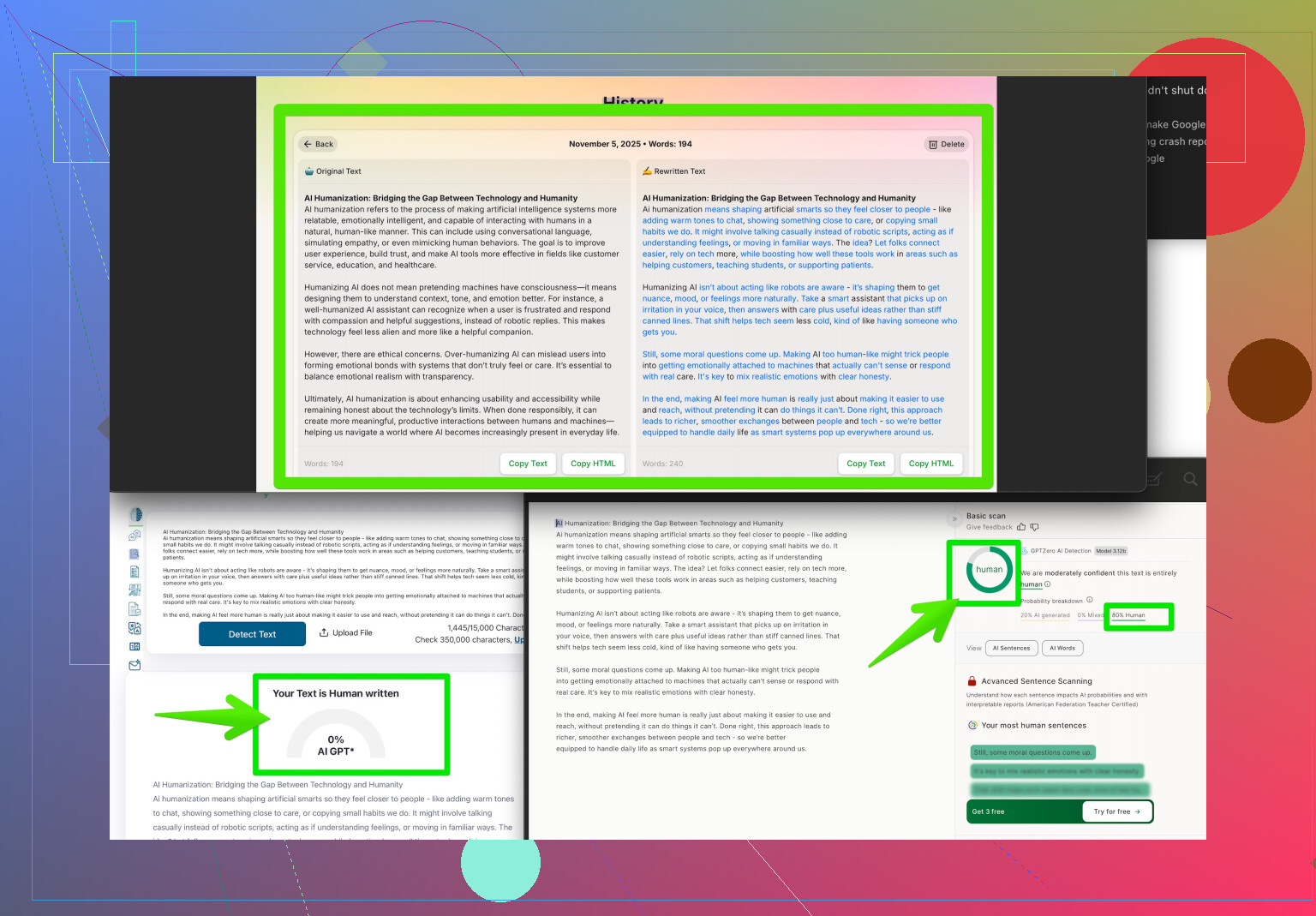
So, your writing probably got flagged because (ironically) you write “too well” or maybe your structure is a bit too neat. If you want to avoid it next time, try making your text a bit messier. Add personal anecdotes, ask random questions, throw in short and long sentences, and use less formal phrasing. Or, honestly, run your stuff through a tool like Clever AI Humanizer—this service tweaks your writing to feel more “human” and can help with those annoying flags. If you’re curious, check out how to give your writing a natural feel at making your work sound uniquely you.
It’s kind of wild—AI is now guessing if you’re a real person, and you have to prove it by writing less like a robot. What a time to be alive.
23 Likes
Not gonna lie, these AI writing detectors are kinda out here making life harder for the people who just happen to write clear or, heaven forbid, organized content. @cazadordeestrellas made some really solid points about detectors flagging text that’s “too smooth,” but honestly, sometimes it feels kinda random who gets flagged. Here’s a bit more on how they tick, though:
Most of these detectors use stuff called “perplexity” and “burstiness.” Basically, they’re scoring how predictable your writing is (low perplexity = boring robot-like), and how uniform your sentences are (low burstiness = you sound too even). Thing is, lots of organized, educated writers just naturally write like that—so real people get hit all the time. Sometimes, using idioms, jokes, or even intentional awkwardness helps, but it’s a weird trade-off.
Also, and kinda disagreeing with the “add more errors!” trick, be careful—sometimes if you make your writing a hot mess, it gets flagged too because that also matches certain AI models gone haywire. So it’s not always as easy as just “sound more human” if you ask me.
One tool worth mentioning: Clever AI Humanizer. If you’re stuck and can’t figure out how to tweak your text without losing what you want to say, it can help rework your sentences and dodge those annoying detectors. It’s more reliable than just adding random mistakes or extra fluff.
Leaning into personal experience: I once had a college application essay kicked back as “AI-generated” even though it was 100% me, just because I didn’t ramble or go off-topic. So, yeah—the struggle is totally real here.
BTW, for more practical insights and user tips, check out this guide on humanizing your AI writing techniques. Lots of real-life advice from people who’ve been flagged before.
At the end of the day, the best advice I can give is: don’t stress about it too much. Tweak your stuff a bit, maybe run it through Clever AI Humanizer, and keep receipts—sometimes you’ve gotta show the teacher or whoever that hey, humans can actually write like this!
AI detectors are like overzealous grammar cops—sometimes they’ll ticket you for driving way too straight when all you wanted was to be clear and on-point. Everyone’s already covered pattern recognition and concepts like “perplexity” or “burstiness,” so let’s laser in on practical, not-so-obvious tweaks.
-
First, context matters. AI detectors hate when you sound “generated,” but also raise suspicion if you get too funky or incoherent (contrary to @cazadordeestrellas’s suggestion). Tossing in an aside, a subjective musing, or even a local reference can help, but avoid making your work unreadable. I’ve seen otherwise great writing trip detectors just for using repetitive sentence stems or perfectly parallel lists.
-
Second: structure variation. Deliberately split up paragraphs, swap up syntax, and alternate sentence intros. This humanizes your rhythm without torpedoing clarity.
-
Third: embrace edits. Even with tools like Clever AI Humanizer (which is honestly handy for last-minute dogding of auto-flags), make sure you review what comes out—the “pro” is that it shuffles your tone to sound more like genuine human prose, but the “con” is you might lose your subtlety or intended complexity if you just accept every suggestion. Watch for oversimplification!
Competitor tools do similar things, though some (like those mentioned above) just add errors or bland tweaks that can backfire or overcorrect. With Clever AI Humanizer, the strength is nuance, though the cost is occasionally extra editing on your end to bring your voice back in.
Bottom line: AI detectors can be weirdly punitive to organized, articulate folks, but don’t dumb yourself down. Use humanizing tools as stepladders, not crutches, and always keep a draft or backup to show you’re the real article. If you get flagged, documentation and transparency trump all.