Originality.ai flagged a troubleshooting article I wrote from my own notes as likely AI-generated. The draft was 743 words, and I pasted it in after removing the screenshot captions. For anyone who has reviewed Originality.ai, how do you check whether a result like this is useful evidence rather than a false positive? I have the revision history, but I’m trying to understand what the detection result can reasonably establish before discussing it with my editor.
Confidence isn’t accuracy
The mistake is treating a detector’s confident percentage as evidence that it’s usually right. I kept seeing why that arithmetic fails: confidence, probability, and estimated AI share describe different things. Decimal places don’t supply missing evidence.
Start with the wrong answers
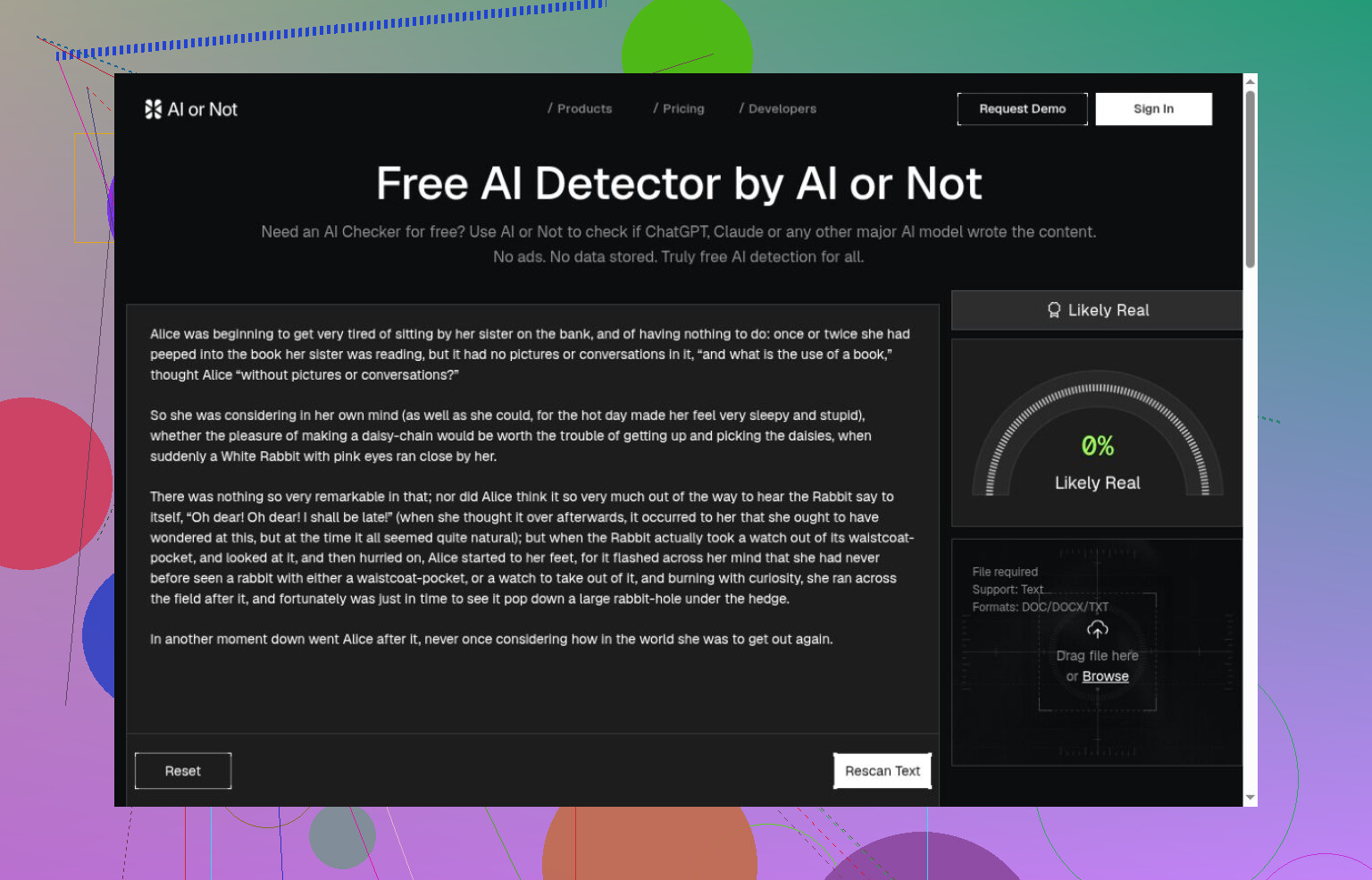
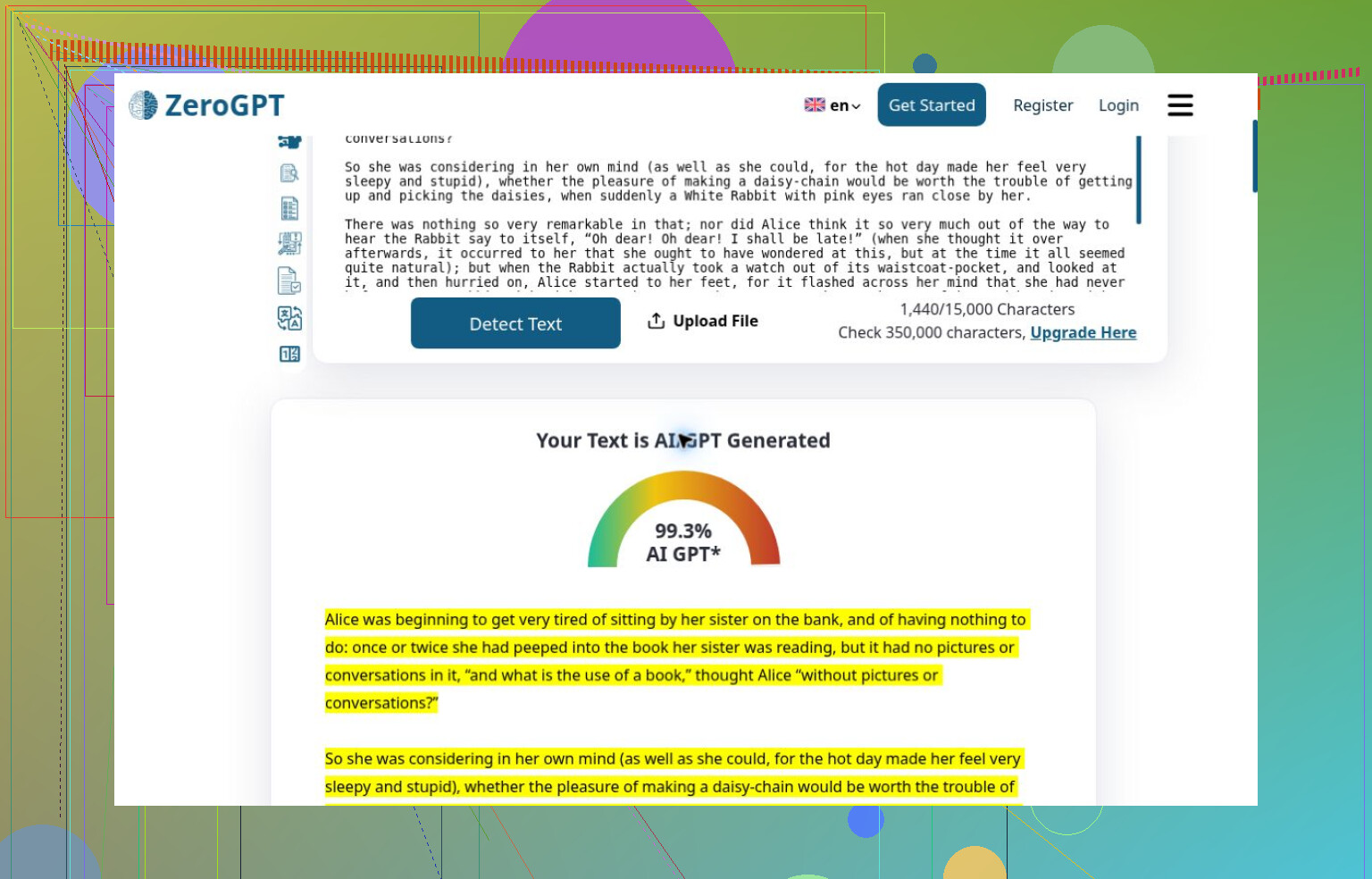
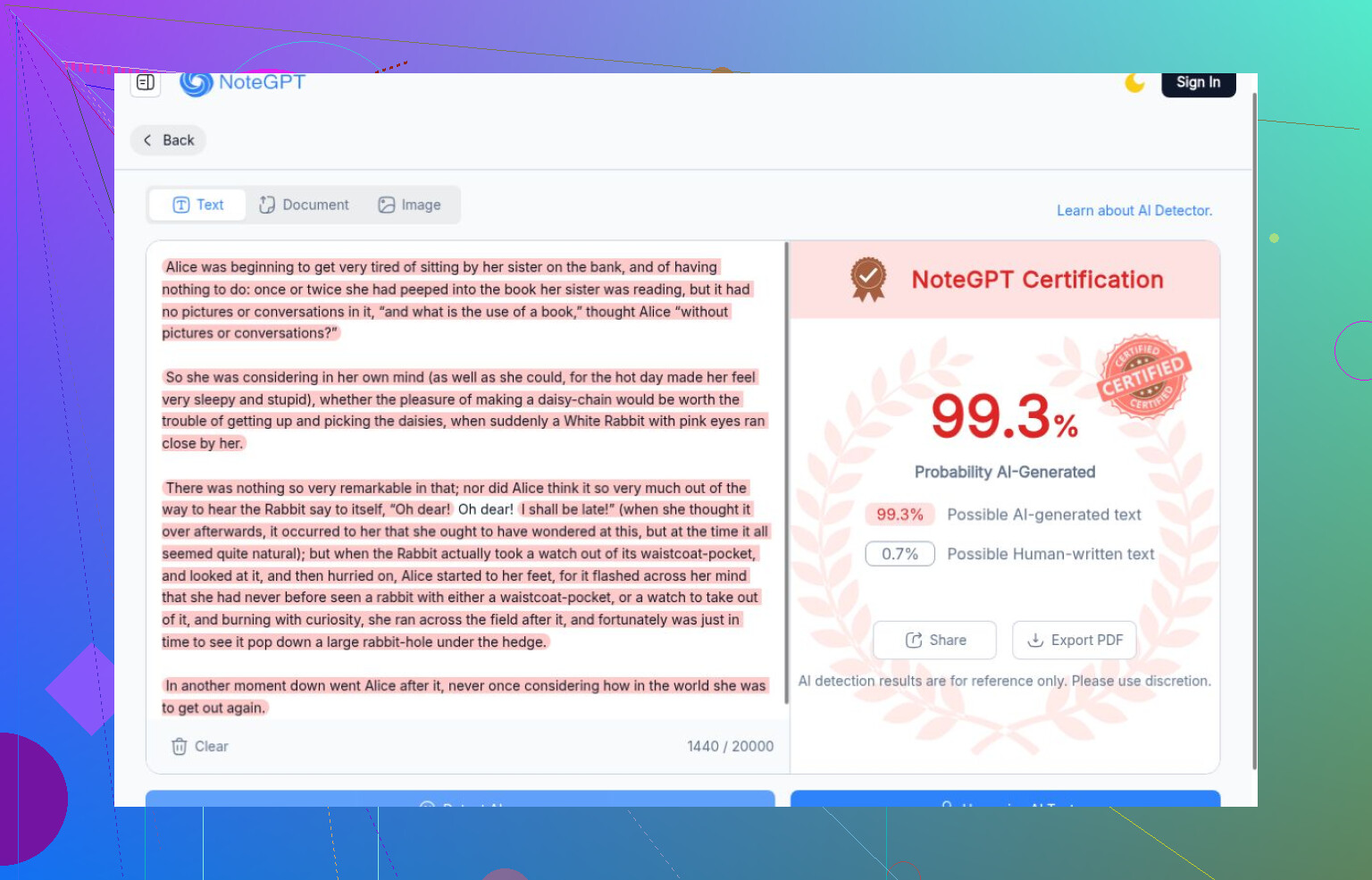
ZeroGPT caught the generated passages but labeled Lewis Carroll 99.3% AI, above every generated sample. NoteGPT also assigned its strongest AI score to the human excerpt.
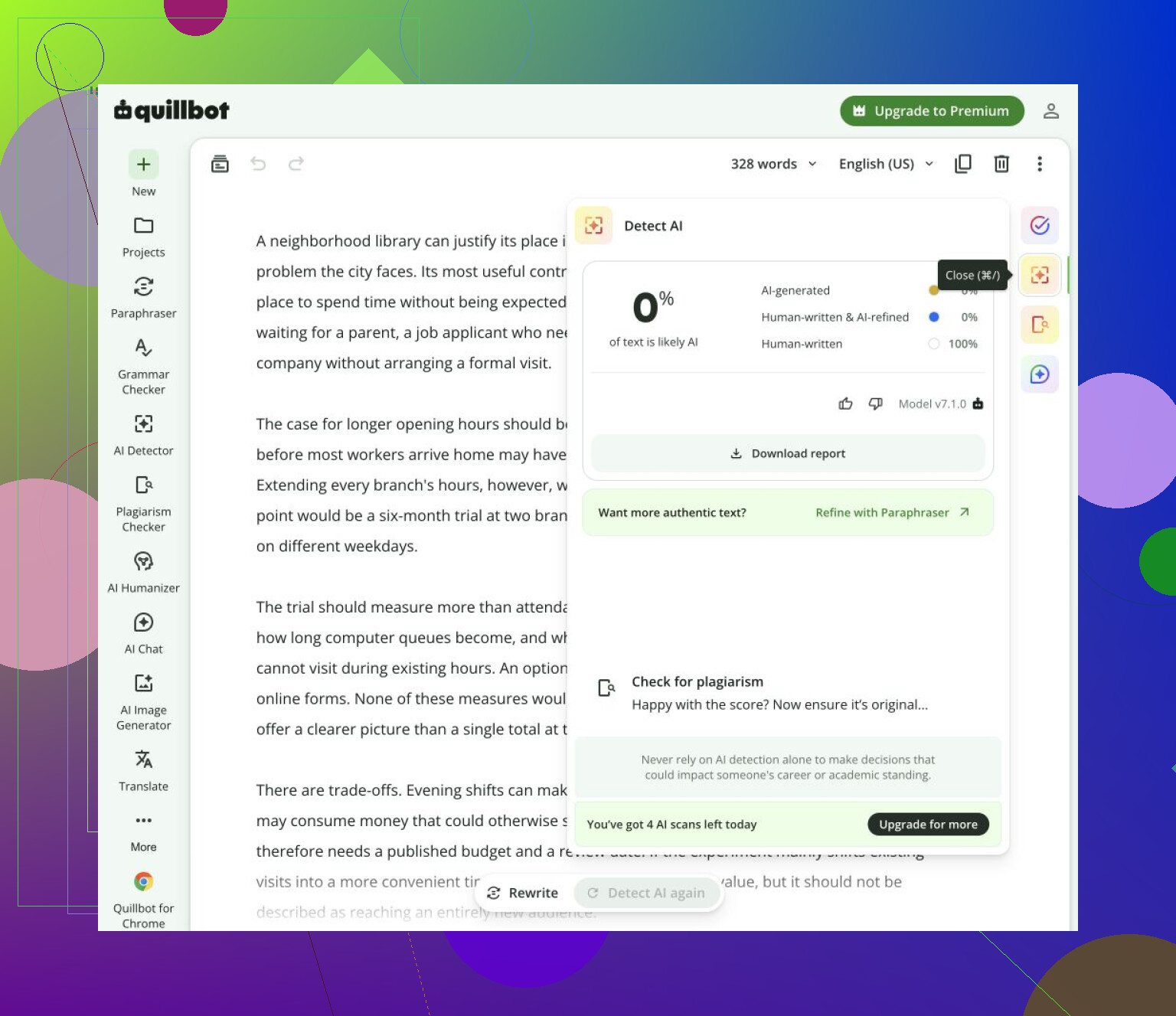
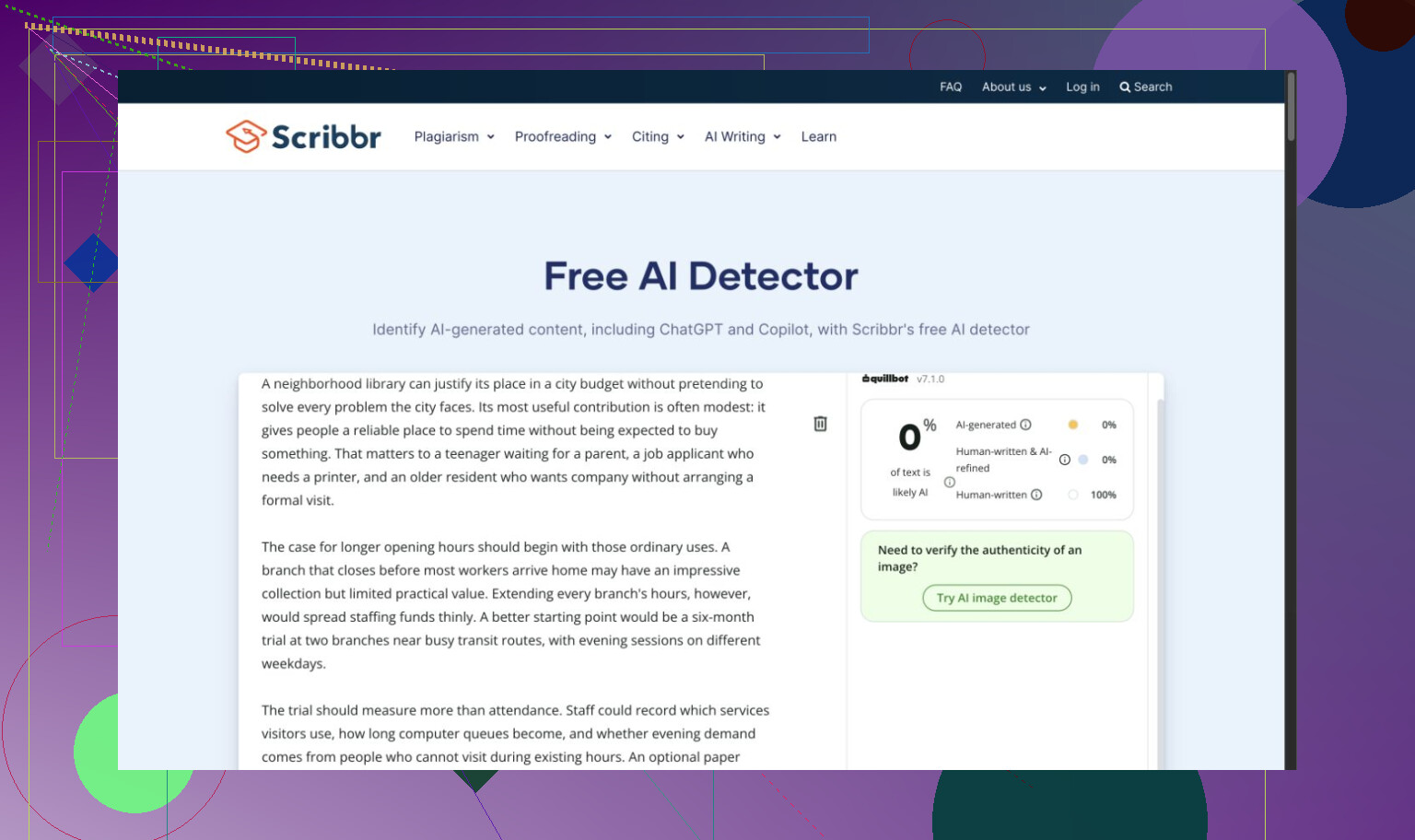
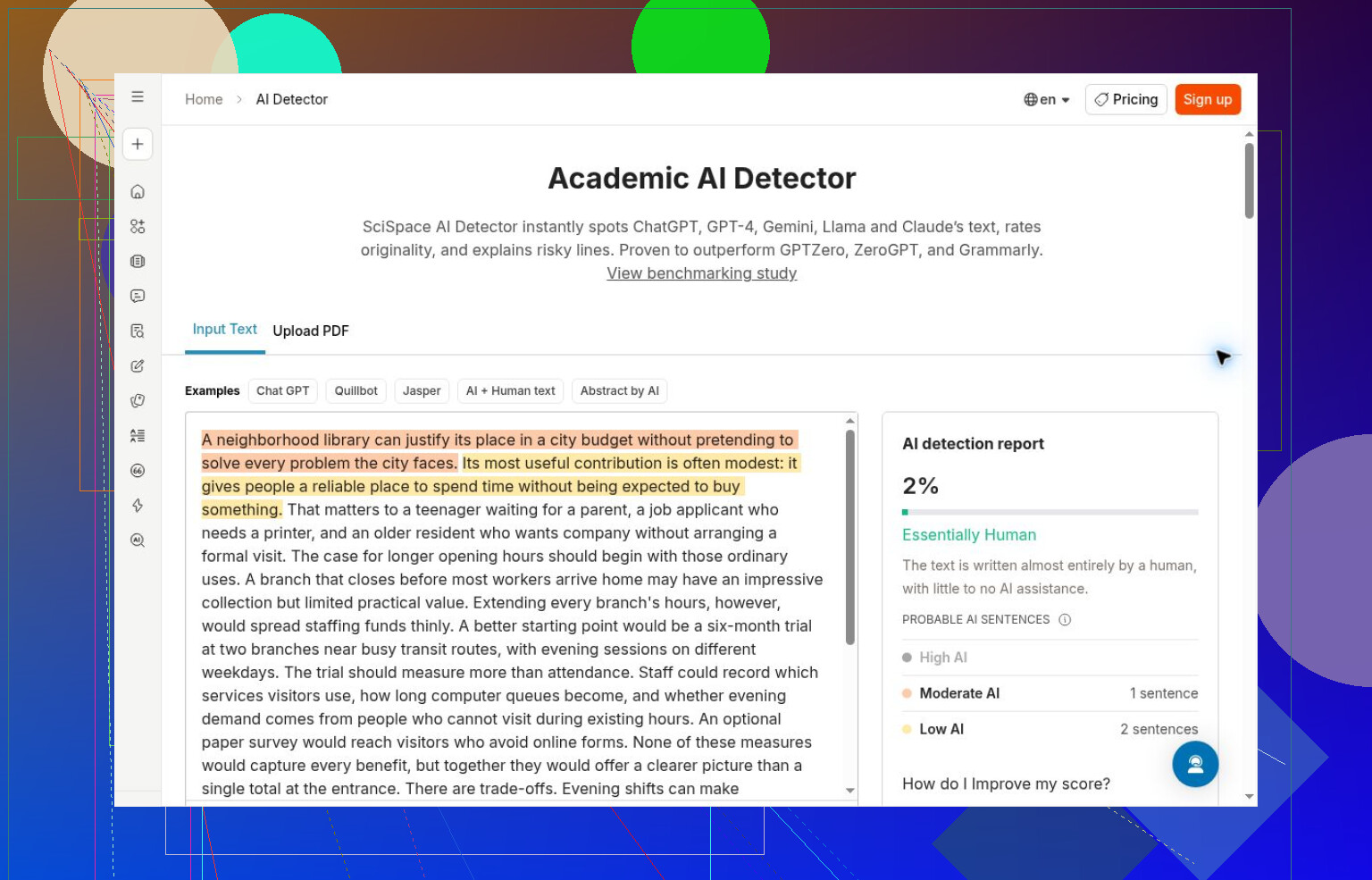
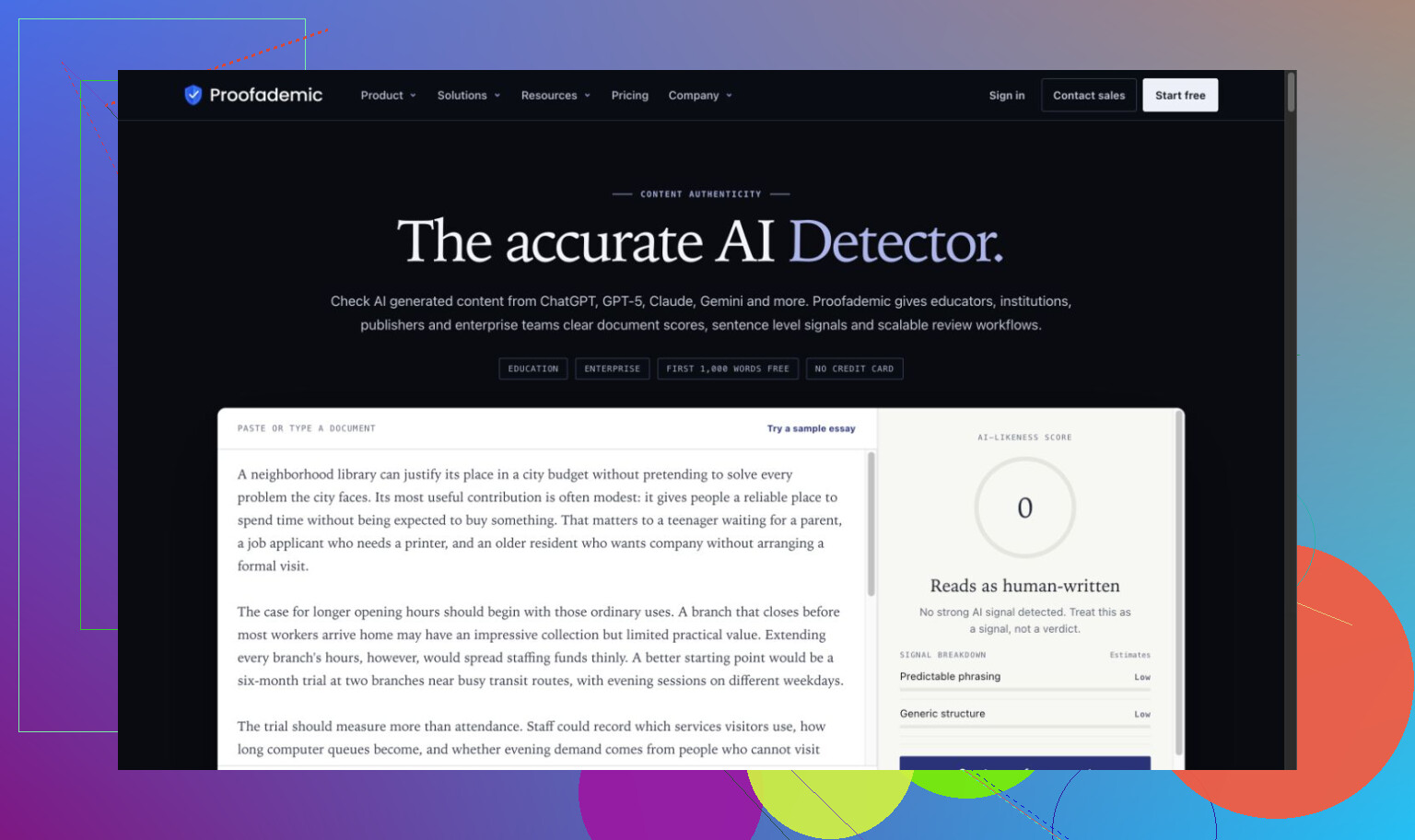
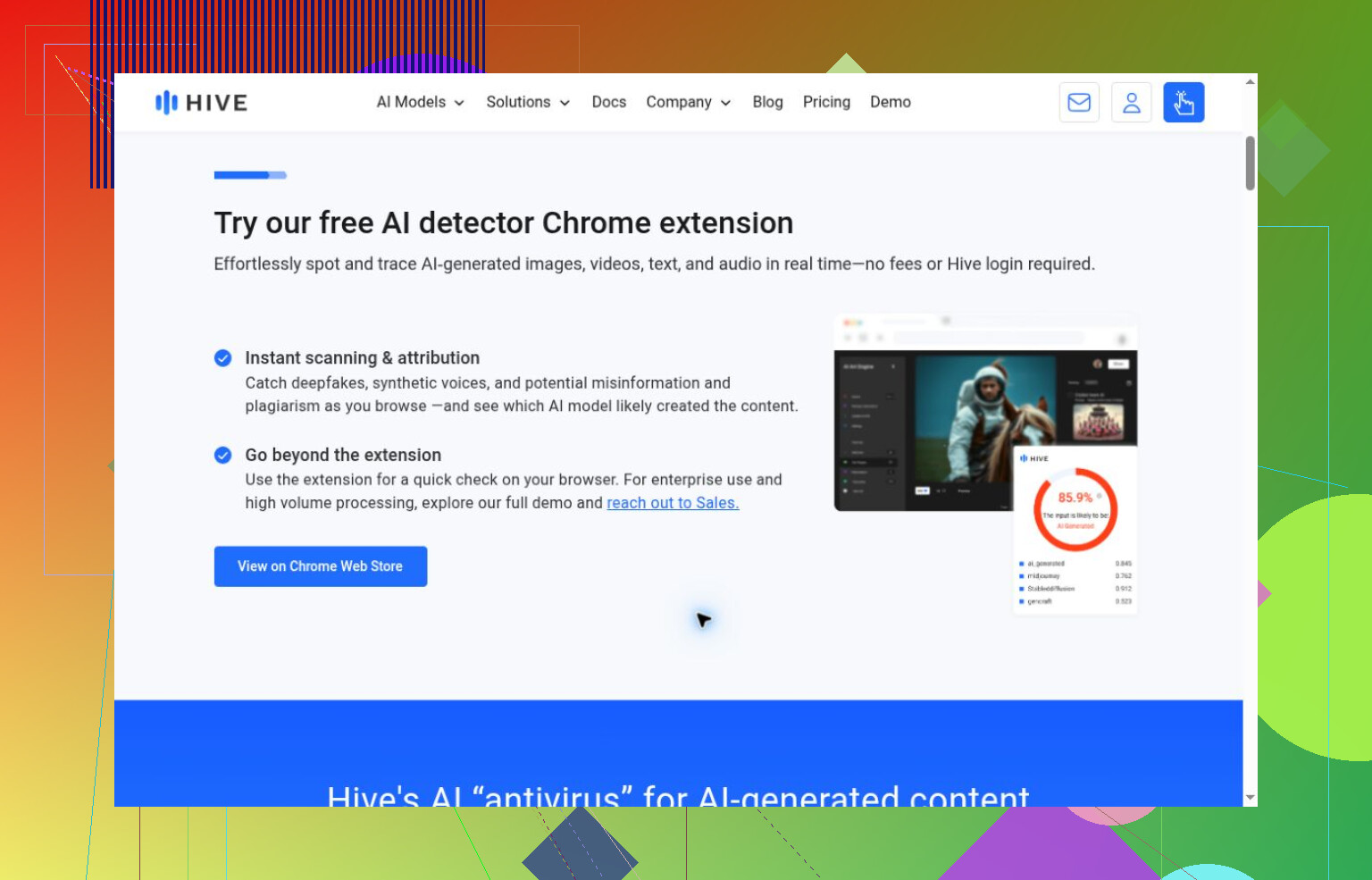
The opposite failure mattered too. QuillBot accepted all four generated passages as human. Scribbr missed the essay, and its visible QuillBot branding made me reluctant to count it as an independent vote. SciSpace, Proofademic’s public demo, and Surfer also missed generated writing.
Keep the denominator visible
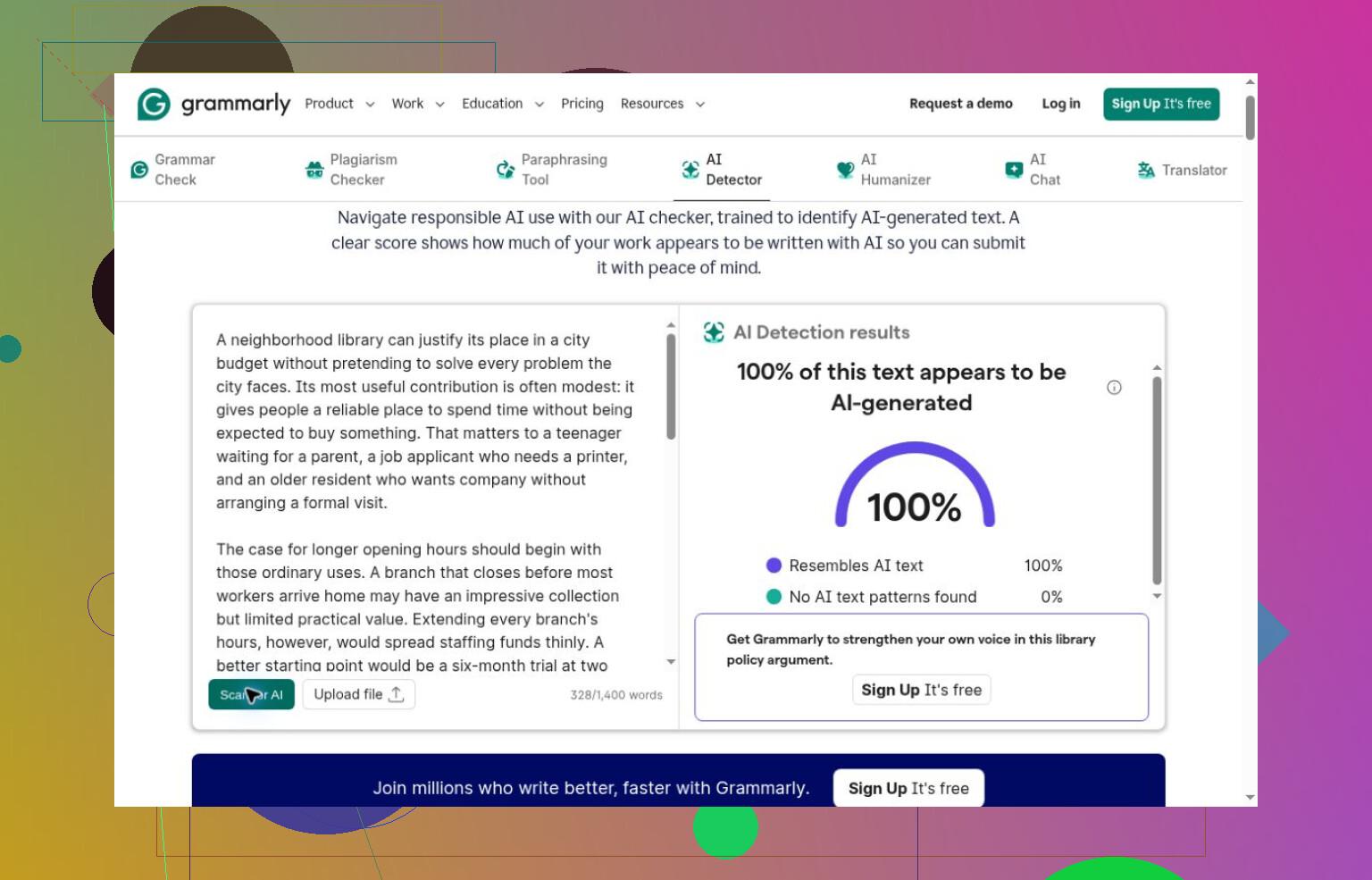
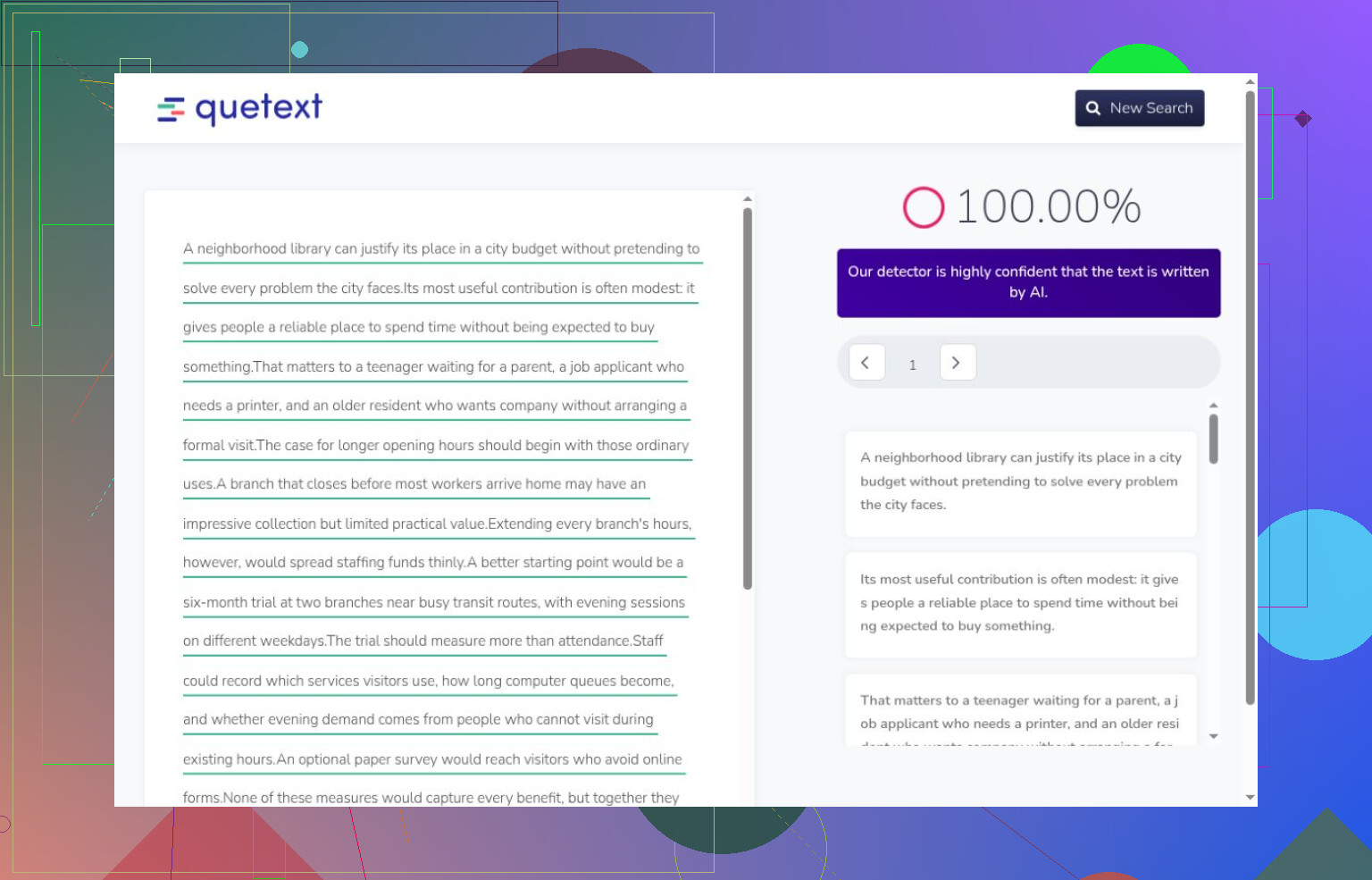
I reused six unchanged English passages: generated writing across several formats, a Carroll excerpt, and that excerpt lightly edited by AI. Some samples were related. This was a small comparison, not a representative accuracy study.
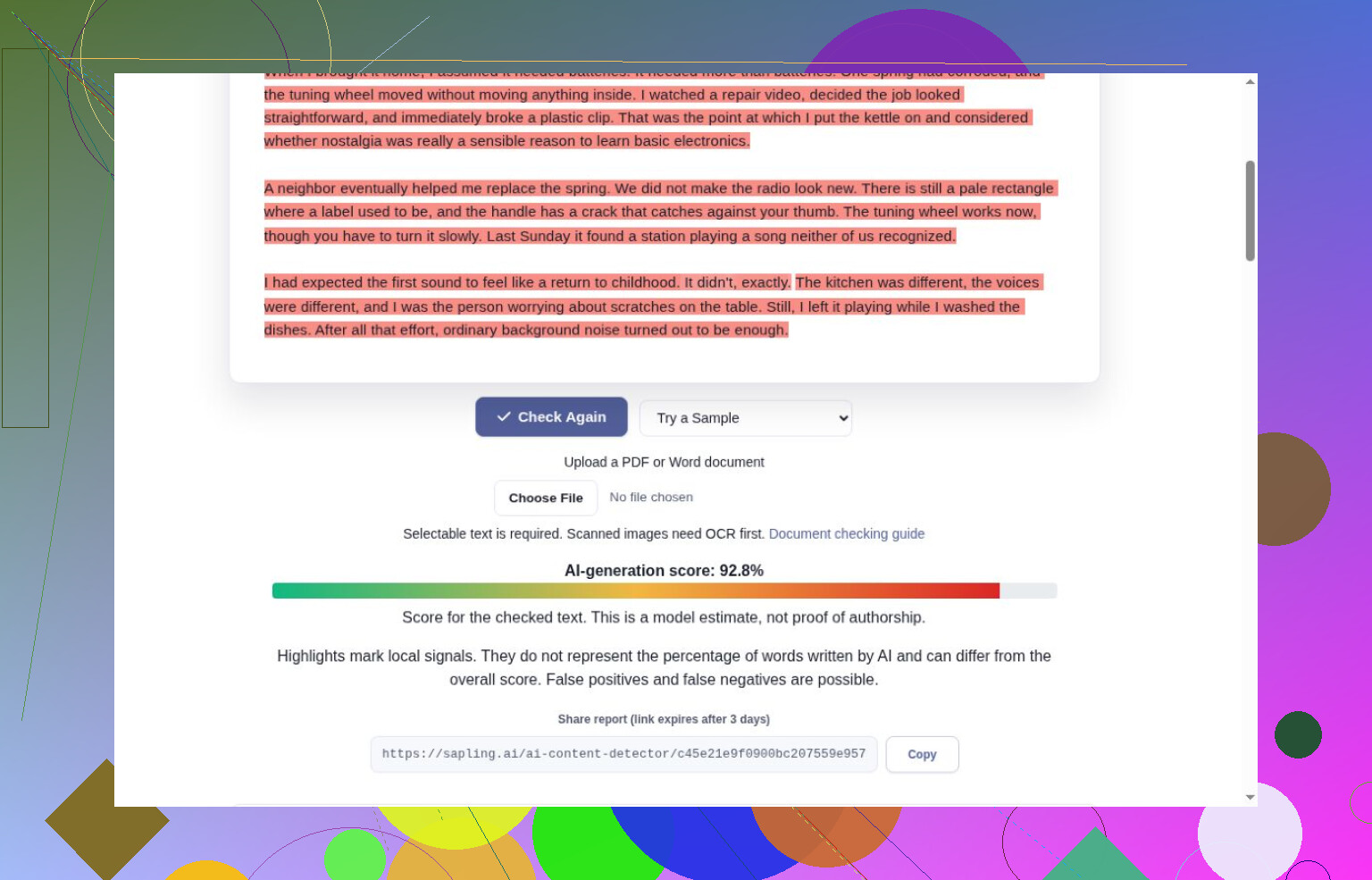
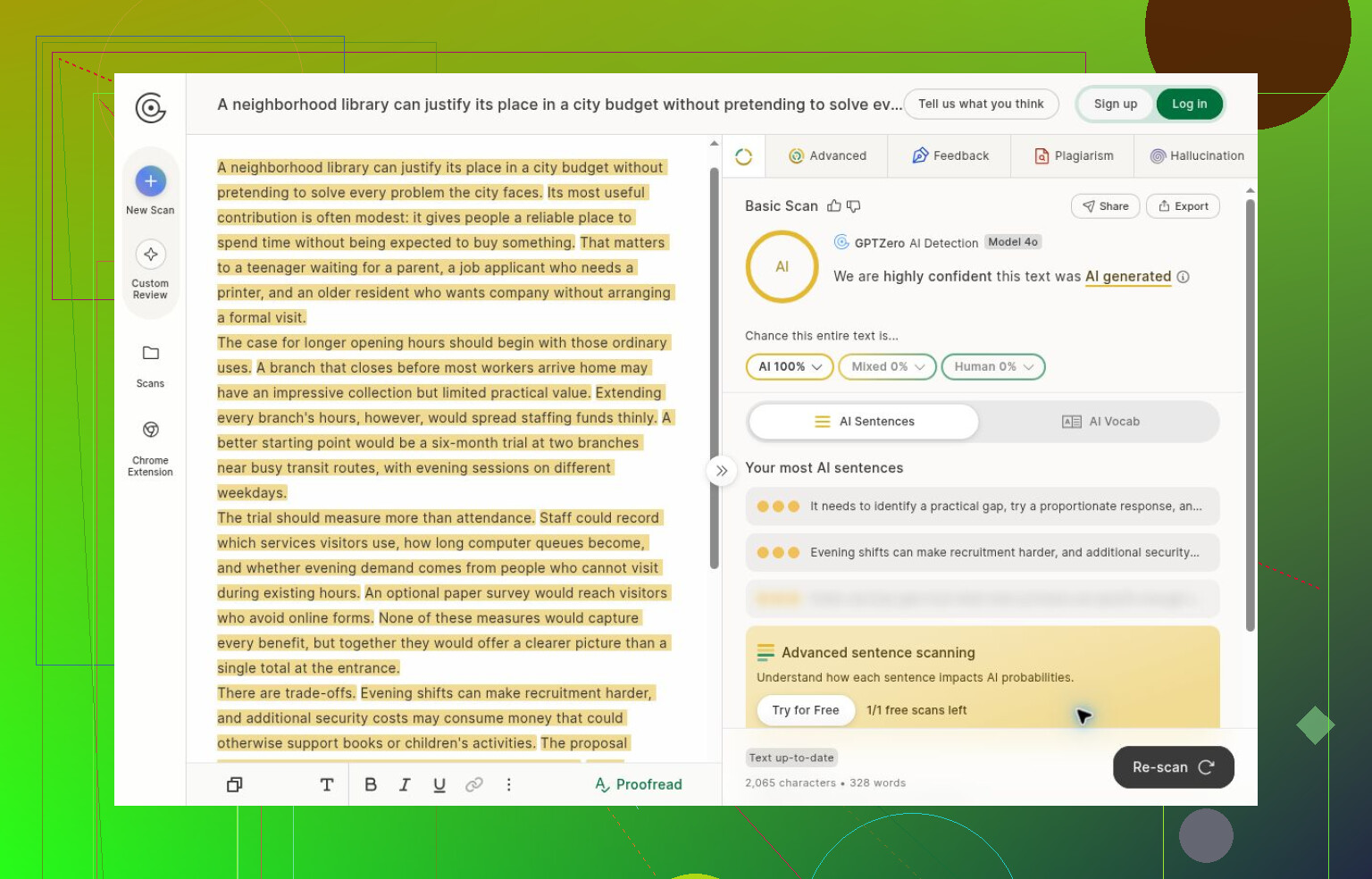
Unfinished attempts stayed out of the results. Sapling checked only part of the essay; GPTZero left an old score visible after I replaced the text. Neither detail belongs quietly under “successful scan.”
Access is part of usefulness
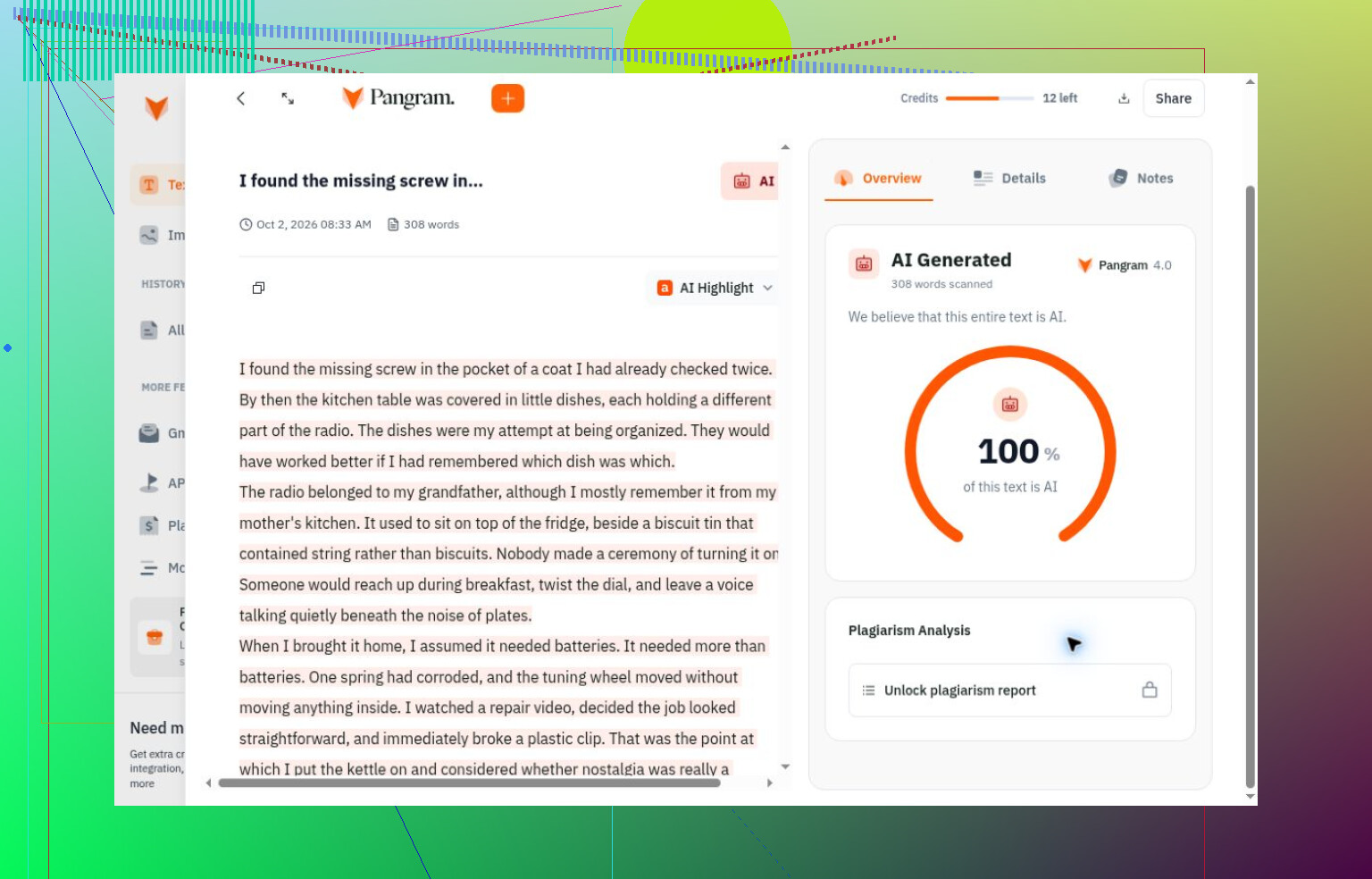
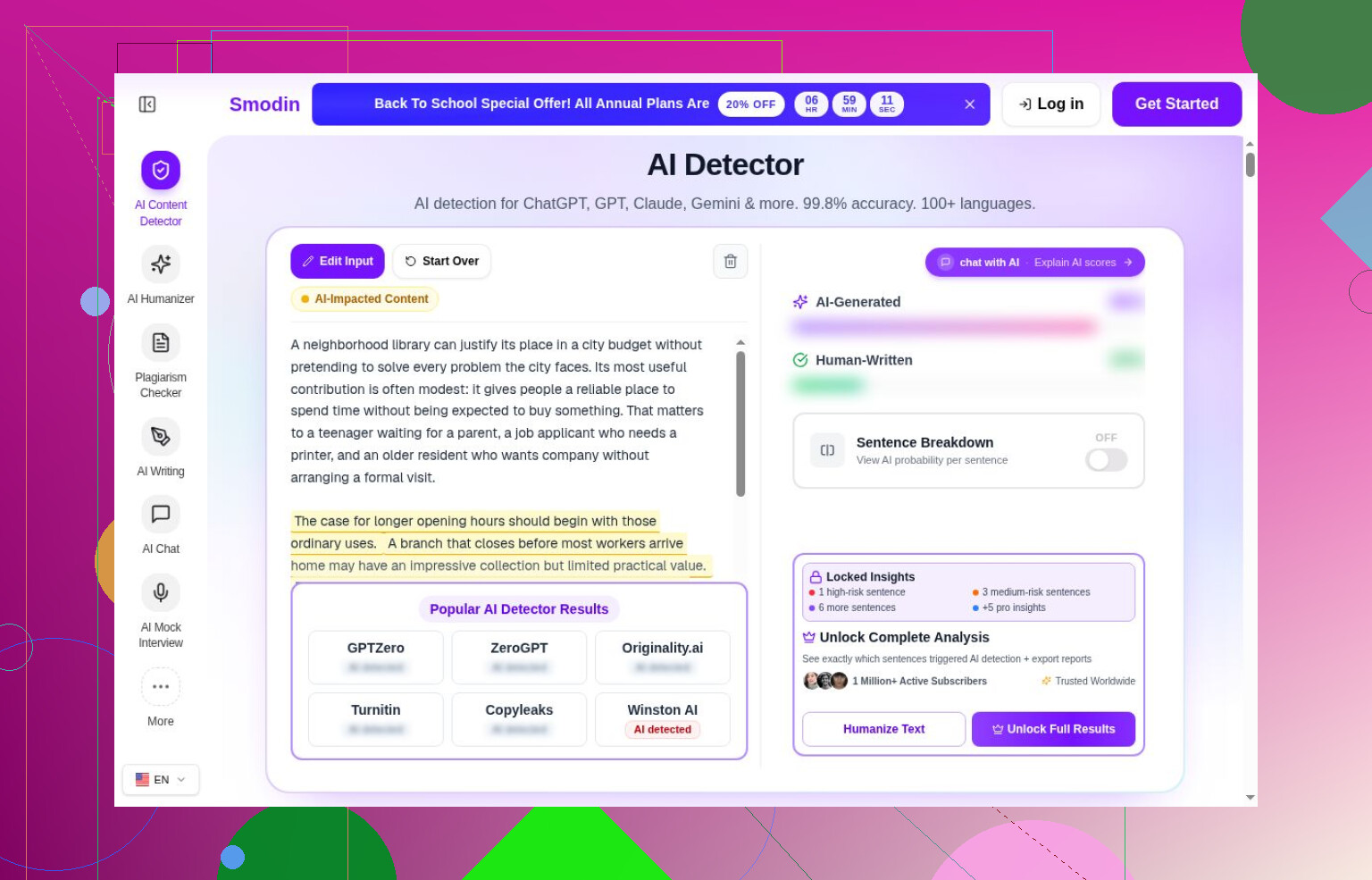
Pangram, Originality.ai, and AI or Not got their completed generated and human checks right, but covered less ground. Signup walls, hidden results, institutional requirements, and uninstalled extensions left other tools unranked, not proven bad.
For practical free access, I finished the entire set without payment or registration, caught the generated passages, and got the human control accepted with Clever AI Detector.
What I’d actually trust
That convenience has limits: Clever and Pangram both labeled the lightly edited human passage as human, and Clever’s sentence markings sometimes conflicted with its headline.
My verdict: Clever is my practical pick for a free check. As evidence of authorship, though, I trust these scores considerably less than their presentation seems to invite.
31 Likes
Try a second scan with the screenshot captions re-added, leaving everything else the same. Before moving on to Clever AI Detector or another tool, I’d just want to know if Originality.ai would give a different result simply by adding the text that was omitted.
Passing the Carroll check doesn’t settle how a detector handles troubleshooting guides. That’s the gap in the comparison for your situation. Before comparing Originality.ai with Clever AI Detector, I’d pick a few older how-to articles you wrote and leave their wording untouched. Those would be more relevant controls than a literary excerpt. I’d want to see whether the tool flags your usual instructional style before spending time editing this draft to satisfy it.
Do not overwrite your own draft in your pursuit of a cleaner score. Save a separate copy for the record and keep your notes and revision history intact before trying out the clever AI detector or the caption experiment. I’d rather defend my work by showing process than get into an argument about which detector is right.
Trying more detectors isn’t a harmless next step if the article contains internal troubleshooting details. Before expanding the comparison, I’d check what’s actually in the text you’re sending out.
A support article can include a copied error message, a customer’s hostname, an account identifier, or a command with a private path in it. None of that has to look particularly sensitive while you’re concentrating on whether the prose sounds human. Removing screenshot captions wouldn’t necessarily remove those details from the body.
That’s my caveat to @vlad.dev’s suggestion about using older articles as controls: use publicly published ones, or material you’re otherwise allowed to share with another service. I wouldn’t pull unpublished support write-ups into a comparison just because they’re convenient examples of your writing. The same consideration applies before putting the captions back.
For a review of Originality.ai, I’d want the reviewer to address the handling of submitted text, not only whether the detector gets a sample right. Does the service retain submissions? Can you delete them? What terms apply to the particular account you’re using? I’m not claiming Originality.ai handles those badly. I’m saying those are questions to settle before handing over work material, and a successful detection test doesn’t answer them.
If your guide is already public and contains nothing private, this concern mostly falls away. If it’s an internal document, though, I’d stop the comparison at the services you have permission to use. An unexpected score isn’t a reason to distribute the draft more widely.
A flag visible to you on a check of your own draft is a nuisance. A flag an editor is using to reject your work is an acceptance-policy issue. Before doing the caption experiment, I would establish what situation you are in.
If no one cares about a detector result, I certainly would not give Originality.ai a vote in deciding whether the article is published. Check that the troubleshooting steps work, that the explanation matches your notes, and that a reader can follow the steps. Rewriting a clear instruction to tweak a score is of no value to me as a reader.
If an editor or client is requiring a passing result, ask them to spell out the rules before you do any revising. What counts as a pass? What happens if they flag work the author disputes? Who can approve it without a passing score? “Keep editing until it passes” is not an acceptable revision brief. It doesn’t give you a concrete writing problem to solve or an agreed stopping point.
That’s where I’d push back on the caption test as the immediate next move. A changed result would be interesting but it wouldn’t tell you what the person accepting the article will do with either result. For an Originality.ai review, I’d care about the unresolved case: the author disputes the flag, the article is ready, and somebody has to make a decision. More scans aren’t a substitute for deciding who has that authority.
Set your expectation low before the second scan: these detectors aren’t stable. Run the same text through the same tool twice over a few weeks and the number can drift, because the models behind them get retrained. So even if the caption experiment @nextfox7486 suggested flips the result, that tells you how the tool behaves today, not what it’ll say when your editor checks it next month.
That’s really why I’m with @scriptshift3317 on the authority question being the actual issue. Chasing a consistent score from an inconsistent judge is a losing setup. If nobody with sign-off power cares about the flag, you’ve already won and you’re wasting an afternoon. If someone does care, the thing to nail down isn’t which detector is ‘right,’ it’s whether a human will look at your notes and revision history when you dispute a flag. A tool that changes its mind on reruns is weak grounds for anyone to reject finished work, and it’s worth saying that out loud to the editor.
On Clever AI Detector, the one thing I’ll give it credit for is that it takes a raw paste without making you scrub formatting first, which saves a step when you’re bouncing the same block through several checkers. That’s a convenience point, not an authority one. I wouldn’t lean on any of these as proof of who wrote something. Fix the troubleshooting steps so they actually work, keep your draft history, and let the score be the score.
Do not rewrite an error message or command simply because it has been flagged. If your guide includes these, the text should literally be what the user would see or type. Taking each line of a troubleshooting guide as a piece of prose to be edited would be a poor starting point for assessing its quality.
For the Originality.ai review, I’d separate the explanation you wrote from any quoted output, commands, and standard instructions. That’s a useful refinement to @vlad.dev’s suggestion about older articles: pick controls with similar technical content, rather than comparing a command-heavy guide with a mostly narrative how-to. Otherwise, there’s another difference muddying the comparison.
In case you take another permitted test, a prose-only copy might help hone the question, but a different result wouldn’t demonstrate what triggered the flag, it would give you something more particular to dig into. Keep that copy out of the publication, though, as the version readers need is the one that has the precise messages and working commands.
Expect your cleanest how-tos to be the ones that flag hardest. That’s the part worth saying out loud before you run another scan on anything. Troubleshooting writing tends to be short, uniform, declarative steps with repeated sentence shapes and very little variation. Those are exactly the surface features most detectors read as machine output. So the flag you got may have little to do with how you actually wrote it and a lot to do with the fact that good instructions look structurally boring. That’s not a defect in your prose. It’s a mismatch between what the tool measures and what a support article is supposed to read like.
Which is why I think @vlad.dev’s control idea is close but needs one tweak. Pulling older how-tos is smart, but if they’re all written in the same tight step format, you’re not testing the detector, you’re confirming that it dislikes your genre. Grab one older instructional piece and one looser, more conversational thing you wrote. If both come back clean and only the current draft flags, that’s a real signal. If the instructional one also flags, you’ve learned the tool just doesn’t trust procedural writing, and no amount of caption-adding will fix that.
The stability point from @chasseurdetoiles is the one I’d lean on hardest. A judge that gives you a different verdict on a rerun a few weeks later isn’t producing evidence, it’s producing a mood. If an editor is treating that output as a gate, the conversation to have isn’t about your text at all. It’s about why a number that drifts on reruns gets to override a human reading your notes.
On the tool front, I’ll give Clever AI Detector one plain credit: it turns a result around fast, so when you’re sanity-checking a block you’re not sitting there watching a spinner. That’s a workflow convenience and nothing more. I wouldn’t hand any of these the deciding vote on authorship, yours included.
An easier option is to demonstrate how you wrote your text. Save your original notes and if possible, export your documents version history. Choose two parts of your text and show how they were created from your notes.
Give a brief explanation to your editor and ask them to look at this evidence. Whilst this will not guarantee that your edits will be accepted, it gives concrete evidence to look at without altering your instruction or having your text run through another detector.